

Below 32°F
That's the point where a frosted coil stops clearing between defrost cycles. A tech can tell you if the lockout is ice or something else, like a failed sensor.
A mini split that won't turn on in a Maine winter has usually frozen up or lost power to its outdoor unit. Below freezing, the outdoor coil can ice over faster than the defrost cycle can clear it, and once ice covers the coil the system locks out rather than run itself into a bigger problem. A tripped breaker or a blown fuse does the same thing, and cold snaps are when a weak electrical connection finally gives out. If the unit has a remote or control board, a dead backup battery or a snow-covered outdoor unit can stop it from starting at all. None of this means the system is finished. It means something specific is blocking it, and that part is usually straightforward to find once someone is looking at the actual unit, not guessing from the thermostat.




You hit the remote and nothing happens, or the indoor head lights up but no air moves. Go outside and look at the outdoor unit. If it's wearing a thick coat of ice, that's your answer. If it's clear but silent, check the breaker, since a tripped one will give you the same dead system. Some units flash an error code on the indoor display, a string of numbers or a blinking light, worth writing down before you reset anything. Left alone on a night when the oil furnace is your backup, that's one thing. If the mini split is your only heat in that room, a dead unit means that space goes cold fast.

In summer the air here sits at a dew point of 59°F, according to NOAA averages for Maine, which is mild compared to muggier states and one reason people here lean on mini splits for cooling instead of fighting damp air all season. But that same unit has to switch to heat mode once the cold sets in, and it's the outdoor coil, built for a job that's mostly light cooling work, that gets tested hardest when it has to defrost itself in a Maine January. A coil sized around a mild summer isn't the issue by itself, but it means the system has less margin when ice starts building on the outdoor unit in winter.
NASA POWER T2MDEW county cells weighted by homes
You can see ice on the outdoor unit, or you've been told that's the problem, but it helps to know what's actually going on inside it before you decide whether to wait it out or call someone. A mini split isn't like a furnace where a part just fails. The freeze up is the system reacting to conditions, and knowing the sequence tells you whether this is normal cold-weather behavior or a sign something underneath it is wrong.
Cold air holds little moisture, but the outdoor coil runs colder than the air around it, so whatever moisture is there lands on the coil as frost. In a Maine winter that frost can build faster than the unit can handle. The system is supposed to notice this and switch into defrost mode on its own, reversing briefly to run warm refrigerant through the outdoor coil and melt the ice, sometimes with the outdoor fan slowing or stopping. If that cycle runs the way it's supposed to, you might see steam coming off the unit for a few minutes and then it goes back to heating. If the coil ices over faster than defrost can keep up, or the defrost cycle itself isn't triggering, the unit shuts down instead of running damaged.
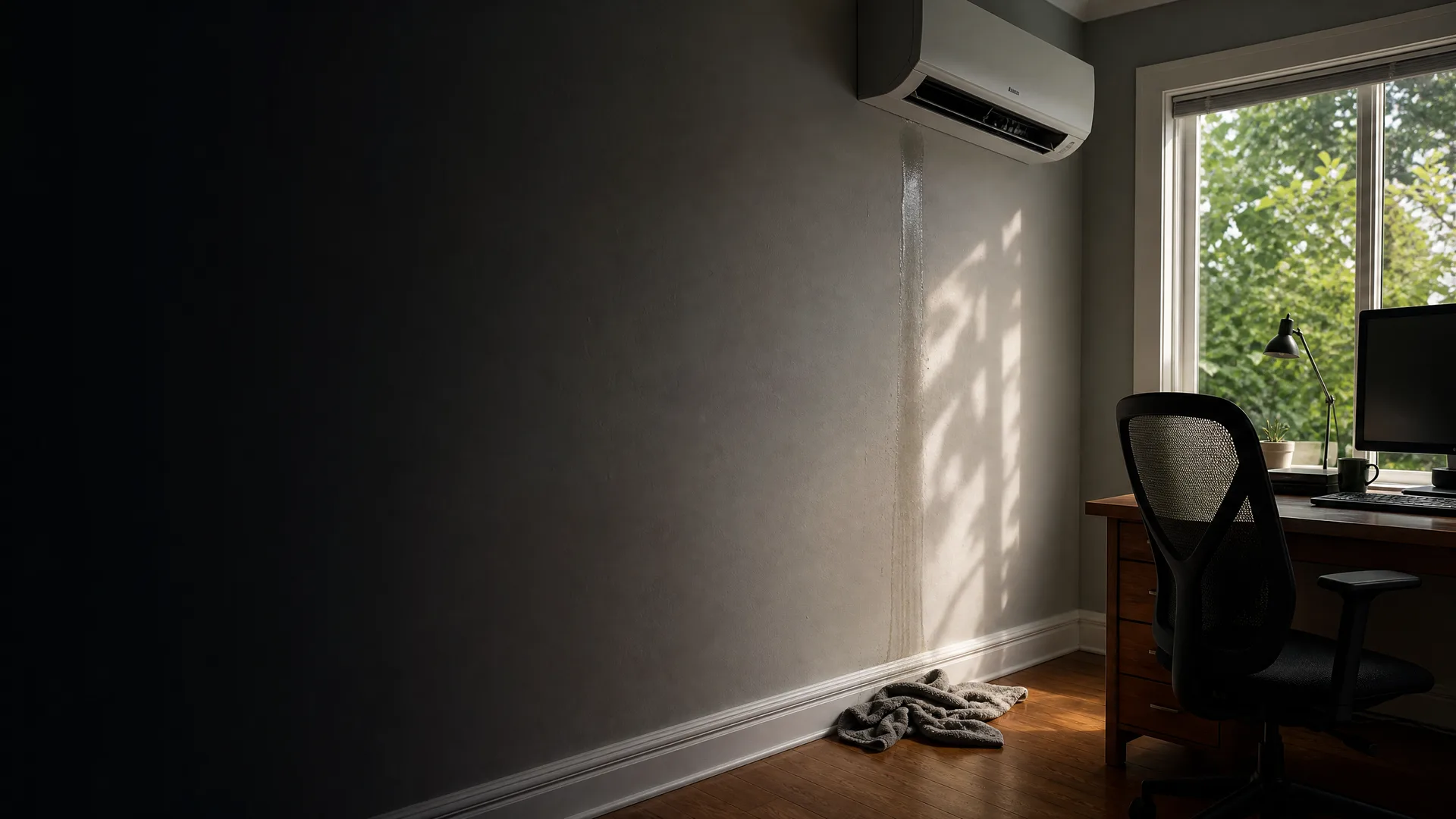
You're at the desk in the home office in July, the one with the mini split head on the wall above the bookshelf. It's been a mild summer as Maine summers go, no heavy air to speak of, but the unit's been running most afternoons anyway. You notice the streak first out of the corner of your eye, a dark line running down the wall under the indoor unit, soaking into the paint. By the time you get up to look, water's dripping steady enough that you grab a towel off the bathroom rack and lay it on the floor under the wall. The unit's still blowing cold air like nothing's wrong.
The pro who reaches out is licensed in Maine.
No charge to send it. You decide if you hire them.
Leave it off overnight to see if it clears on its own. A mini split that's iced over will sometimes defrost given enough hours above freezing, and some homeowners wait through one cold snap before calling anyone.
If the ice comes back the next cold night, waiting again won't fix it. A coil that freezes repeatedly usually points to low refrigerant or a failing defrost sensor, and that only gets found by someone who opens the unit up.


That's the point where a frosted coil stops clearing between defrost cycles. A tech can tell you if the lockout is ice or something else, like a failed sensor.
A local pro who works on these units all winter knows which parts fail first in the cold and shows up ready to fix that, not guess at it.
Plenty of houses here have a mini split as backup to an oil furnace or boiler. If the heat pump won't come on, you still have heat, so there's no rush to fix it tonight. The oil system carries the load, the bill reflects that, and the room with the mini split head might run a few degrees cooler than the rest of the house until someone looks at it. You lose comfort in one room, not warmth in the house.
Some homes here, especially newer ones or additions, use the mini split as the only heat source in that space. When it won't turn on below freezing, that room has nothing else keeping it warm unless there's a baseboard heater or a space heater standing in. Pipes near exterior walls in an unheated room are a real worry during a hard freeze. This is the situation where getting someone out matters more, and soon.
At that rate, a mini split that's frozen up and running its backup heat strip to cope costs you more per hour than the heat pump mode it's supposed to be using. Getting the outdoor unit working again isn't just about comfort, it keeps your bill from climbing while it sits broken.
EIA-861 2025 statewide residential average

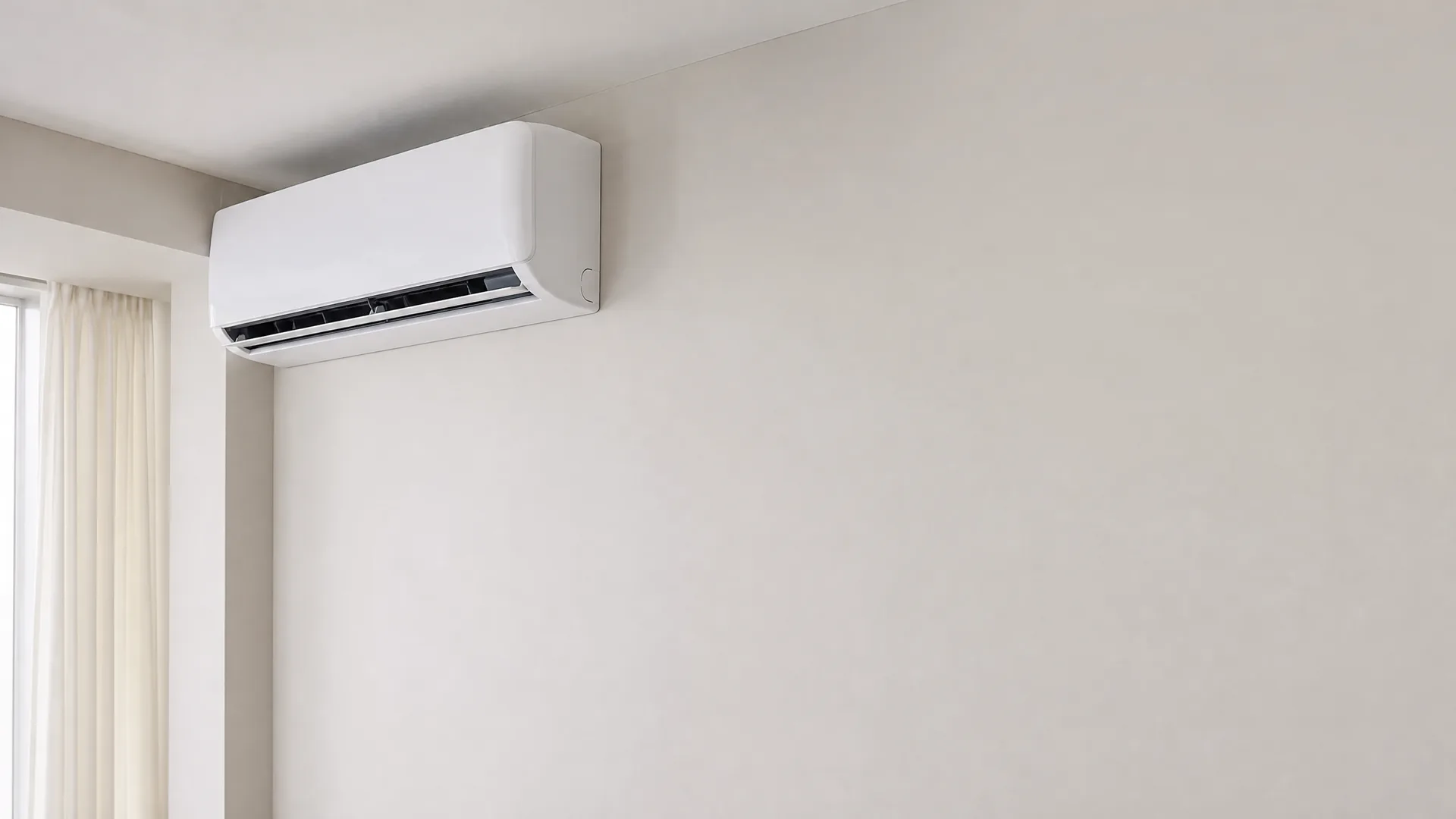
This is what a mini split looks like when it's keeping up. Air moves out of the head steadily, the outdoor unit cycles on and off on its own schedule, and the wall stays unmarked. Nothing about it asks for attention. You'd walk past it in the hallway without a second look.

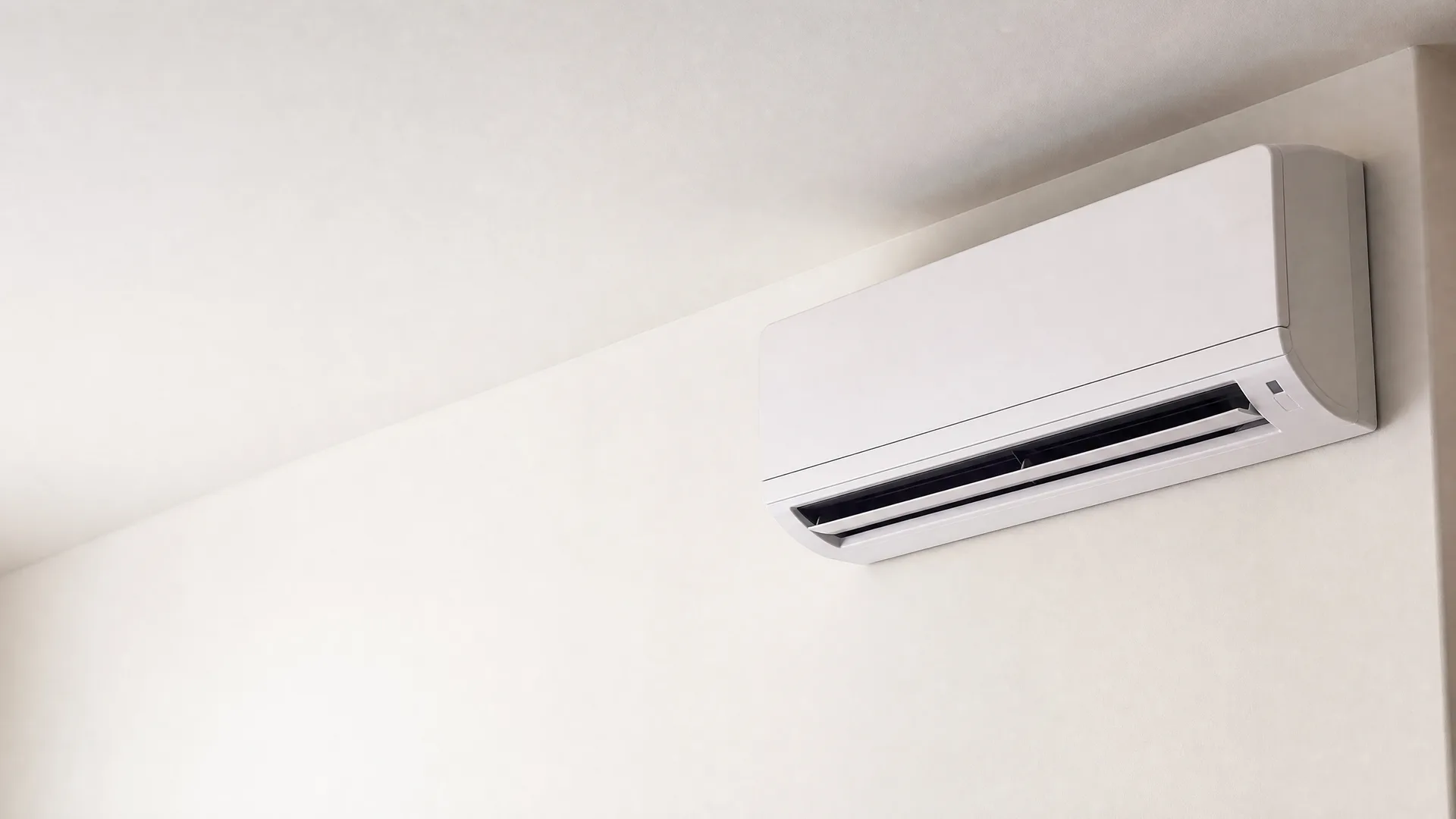
Dust has built up across the casing and the vents, and the front panel's been left open with the filter exposed. A filter packed with dust blocks airflow across the coil, and a coil that can't move air is more likely to ice over and lock out on a cold night. That grime didn't show up overnight.


The system isn't broken. It's frozen, or it's lost power to the outdoor unit, and both of those have a known fix. If the ice keeps coming back on cold nights, the defrost cycle has stopped keeping pace, and that's a repair, not something that clears on its own forever. You can leave the oil heat carrying the house tonight. That costs you comfort in whichever room the mini split handles, nothing more, and it buys you time to get the right person out instead of the first one available. When you send the request, it goes to one contractor, someone local who's licensed and who sees this exact failure all winter in Maine. That matters more than it sounds like it should. A tech who works on these units every cold season knows whether a given ice pattern means a bad defrost board, a stuck sensor, or something simpler, and checks that before replacing parts that were never the problem. You also aren't stuck juggling calls from three different companies trying to get a look at your outdoor unit while the temperature drops again tonight. Just one person, already pointed at your actual symptoms. Once that unit is running its defrost cycle the way it's supposed to, you're not paying for backup heat strips to do a heat pump's job, and you're not standing outside checking the coil every time it gets cold. The system goes back to being something you don't think about, which is what it was before this started.
You only hire the pro if you want to.
A mini split that sits dark through another cold night isn't going to thaw itself out before the next snap hits. Send the request now and a local pro who knows these units gets word, instead of you running the oil furnace harder while you wait and wonder.