Running clean
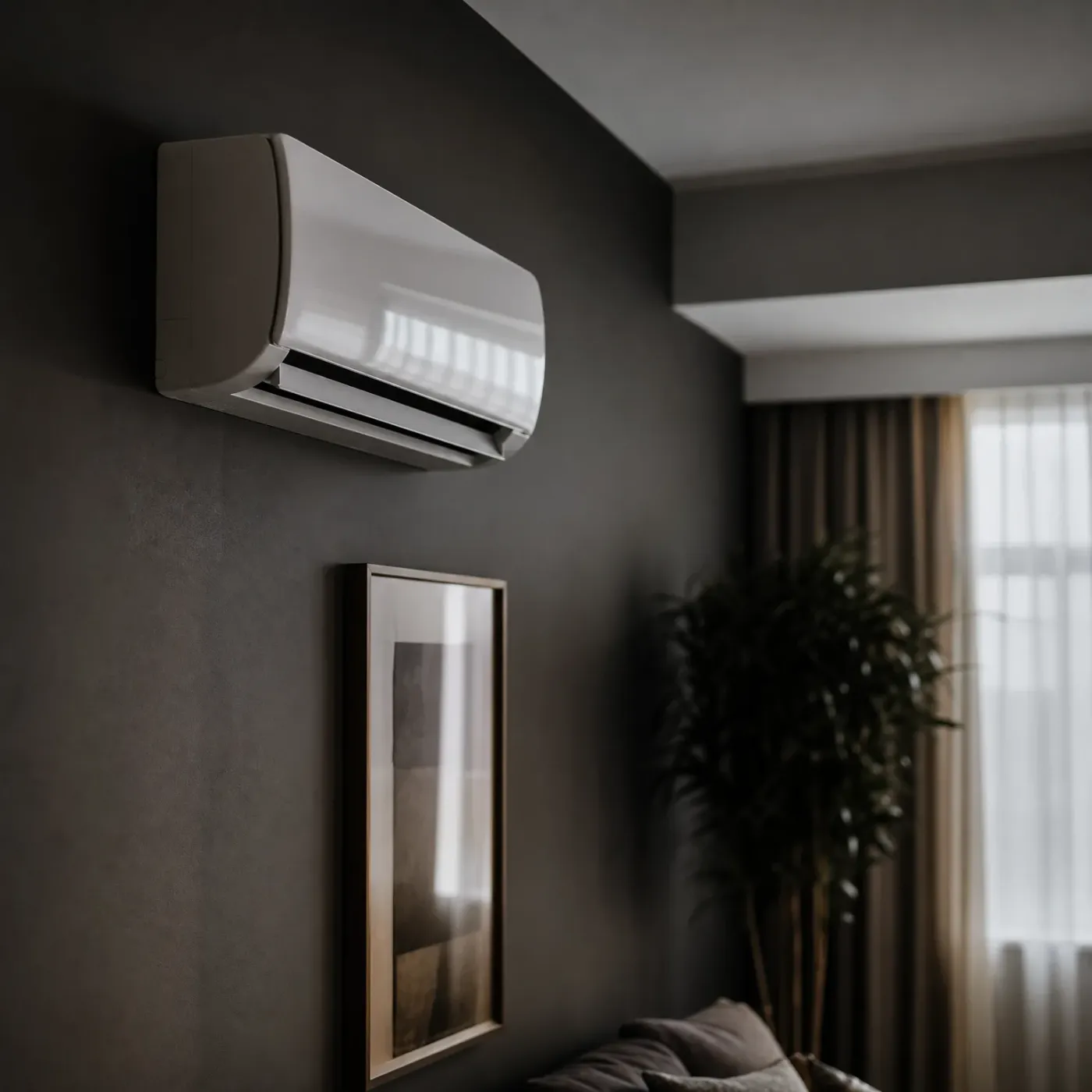
The unit cycles, clicks once or twice during defrost, and goes back to blowing warm air. The louvers close and open on their own schedule. No smell, no drip, no grinding. This is a mini split doing its job on a cold night.
Hand off the search today
Your mini split is working harder in the cold than it does all summer, and that extra strain is where the clicking, buzzing or rattling comes from. Below you'll find what's normal for a Maine winter and what's a sign the unit needs a look. If it's the second kind, you can get a local technician who knows this equipment to sort it out without chasing one down yourself.
Hand off the searchA mini split clicking or buzzing in cold weather is usually the defrost cycle working. Outside, the unit's coil collects frost in freezing air, so it periodically reverses itself to melt that off before it chokes the system. You'll hear a clunk when the reversing valve switches, then a whir as the outdoor fan changes speed, then quiet while it finishes. That's normal through a Maine winter, especially on the coldest nights. What's not normal is noise that doesn't stop, a rattle that wasn't there last year, or a buzz from the indoor head while it's just running, not defrosting. That usually means a loose panel, a fan blade hitting ice or debris, or a part inside starting to wear out. Left alone, a failing part tends to fail the rest of the way, and that's a harder repair than catching it early, especially on a night you're counting on the heat to keep the house warm.
At that rate, a mini split straining through a noisy defrost cycle isn't a cheap thing to ignore. Every extra minute the unit runs to fight frost or a failing part shows up on your bill. A unit cycling properly costs you less than one stuck defrosting over and over.
EIA-861 2025 statewide residential average
A mini split that clicks during a cold snap and goes quiet when temperatures climb back up is doing exactly what it's built to do. Frost builds fastest when it's coldest outside, so the defrost cycle runs more often on a 10 degree night than it does at 30. If the noise tracks the thermometer that way, the unit is keeping up. Most homes here lean on oil heat and only ask the mini split to cover the shoulder months or a room that runs cold, so it may not be used to working this hard. That's still normal operation. What matters is whether the sound fades once the cold breaks, not whether it shows up at all.
A different case is a mini split that clicks, buzzes or rattles no matter what the temperature does outside, or one where the noise has gotten louder over a few weeks. A defrost cycle finishes and goes quiet. A loose fan blade, a failing motor bearing or a compressor under strain doesn't. If the outdoor unit is running constantly, icing over instead of clearing, or making a sound you haven't heard from it before, that's the unit telling you something is wrong, not something it's handling. A local contractor who works on these systems all winter can tell the difference in a visit and knows which parts tend to go first in a Maine cold snap.



The unit cycles, clicks once or twice during defrost, and goes back to blowing warm air. The louvers close and open on their own schedule. No smell, no drip, no grinding. This is a mini split doing its job on a cold night.

Dust and discoloration on the housing usually means dust inside it too, coating the coil and clogging the blower wheel. A unit working through that grime pulls more power to move the same air, and the noise it makes won't quiet down when the temperature does.

The noise you're hearing in January has nothing to do with the mild, dry summers that let a mini split coast up here. Maine summers run a dew point of just 59°F, which is low enough that the outdoor coil barely works to pull moisture out of the air. Come winter, that same coil is coated in frost instead, and defrosting it takes real effort. If the clicking is new or getting louder, that's the system telling you it's working past what a normal defrost cycle should take. Send the form and you're done searching. A local tech who services these units all winter can tell you fast whether it's the defrost board or something wearing out underneath it.
NASA POWER T2MDEW county cells weighted by homes
Your request goes to one pro, not a list of companies.
There's no charge for the request.

It's July, humid for Maine but nothing like the heat you hear about from relatives down south. You're at the desk in the home office, mid-afternoon, trying to get through a video call before the kids get home. You notice the wall under the indoor unit looks dark, then wet, a streak running down toward the baseboard. You grab the towel from the hall closet and press it against the drywall, then look up at the unit itself. No ice anywhere, no clicking. Just that steady drip finding its way down the wall instead of out through the line where it belongs.
You hear it most at night, when the house is quiet. A click from the outdoor unit, then a few seconds of a louder hum as it works through defrost. That part is normal. What's worth paying attention to is a sound that doesn't fit that pattern, a grinding that wasn't there last week, a rattle that gets worse instead of settling down, a buzz that keeps going well past when the unit should have gone quiet again. If the room it heats is running cooler than it used to, or you're hearing the outdoor unit strain more than click, that's the system telling you something is wearing down. Left alone through a Maine winter, a small problem in a mini split tends to turn into a bigger repair, and a harder-working unit costs more to run on power that already isn't cheap here.

This is what a mini split looks like doing its job. The casing stays clean, the louvers sit even, and the clicks you hear during defrost don't carry into a grind or a buzz that lingers. Nothing drips from the wall below it.

Dust and grime built up like this on the casing usually means the filters behind it are just as dirty, and a unit working through that film pulls harder to push air through. That extra strain is often where the noise is coming from, not the cold outside.


A mini split working through a Maine winter makes noise. Most of it is the defrost cycle, the unit clearing ice off the outdoor coil so it can keep pulling heat from air that's well below freezing. That clicking and the hum that follows isn't the system struggling, it's the system doing the job it was built for, and it'll run more often on the coldest nights because that's when frost builds fastest. Quiet again once the temperature climbs back up means nothing is wrong.
What doesn't fit that pattern is worth your attention. A grinding sound, or a buzz that keeps going after the defrost cycle should have finished, usually means a motor bearing or another part giving out, and it gets worse the longer it runs. Water showing up near the indoor head isn't about the cold outside at all. That's a condensate line backing up, and left alone it damages the wall around it.
The difference between those two matters because one needs nothing from you and the other needs a technician before it gets more expensive to fix or to run. If what you're hearing tracks with a cold snap and fades when it passes, you don't need to do anything tonight. If it doesn't fit that, the unit is telling you something, and it's better heard now than after another month of winter.




Hand off the mini split problem
The pro who reaches out is licensed in Maine.

