Sized right
This unit cycles on, runs long enough to pull the moisture out of the air, then shuts off. The room feels dry and even, not just cold. That's a mini split matched to the space it's cooling.
 Request a pro
A local pro who knows mini splits gets your details and gets in touch.
Sizing a mini split for a Maine home takes more than square footage. A unit that's too big cools the room fast and shuts off before it pulls the damp out of the air, so the room feels clammy even with cold air blowing. One that's too small runs flat out all July and still can't keep up on the hottest days. Getting it right matters more here than in places with heavier summer air, because Maine summers are warm without that heavy, sticky feel, and a mini split sized for a muggier climate will short cycle and waste power doing it.
Winter changes the math too. Most homes here heat with oil, and a lot of homeowners are leaning on a mini split to take the edge off the coldest months and cut down on oil use. That means the unit has to be sized for how it performs in the cold, not just the heat, and that's a different calculation than a straight cooling load.
Power in Maine is some of the most expensive in the country, so a unit running inefficiently, whether oversized or undersized, costs more every month than it would somewhere with cheaper electricity. The right size is the one that matches your home's actual heat loss and heat gain, your insulation, your windows, and how you plan to use it.
That calculation depends on things specific to your house, not a chart. A contractor who comes out and looks at your space, your existing ductwork or lack of it, and your oil system can size the unit correctly for your home instead of guessing from a square footage table.
Once you send your information, the work of tracking down someone qualified is off your plate. A contractor who installs mini splits in Maine homes will reach out to you directly to talk through your space and what you're trying to get out of the system.
You want a straight number before a contractor comes out, something close enough to know if a quote makes sense. Square footage charts get you in the neighborhood, but they're built for average walls and average sun, and your house is neither of those things exactly. You want to know what actually goes into the number for a place like yours.
A contractor sizes each zone by running a load calculation, not a square footage chart. That calculation looks at the room's square footage, its windows, how much insulation is behind the walls, and how many walls face outside. A well-insulated 400 square foot room might only need a 9,000 BTU unit. A drafty room the same size, or one with a cathedral ceiling, can need twice that. Oversizing is the more common mistake here. A unit too big for the room cools it fast and shuts off before it pulls the humidity out of the air, so summer afternoons feel damp even with cold air coming out of the vent. Getting the number right matters more than getting a bigger unit.

This unit cycles on, runs long enough to pull the moisture out of the air, then shuts off. The room feels dry and even, not just cold. That's a mini split matched to the space it's cooling.

A unit that's too big for the room blasts cold air and quits before it's done its job, leaving the air damp. One that's too small never gets a break. Either way it's working harder than it should.




Getting the BTU number right starts with a room by room load calculation, not a chart that spreads square footage evenly across the house. Maine homes that heat with oil or baseboard often have one room that holds heat fine and another that bleeds it out through an old window or a thin wall, and a flat estimate misses that every time. For a single-zone system, the BTU rating has to match what that specific room gains in heat, nothing more. A multi-zone setup works the same way for each head, even though they all run off one outdoor compressor. Getting this wrong in either direction causes problems. Too big, and the unit shuts off before it pulls the moisture out of the air, leaving the room cold but damp. Too small, and it runs nonstop trying to catch up. On the heating side, winter here means long stretches well below freezing, so the outdoor unit needs to be rated to keep producing heat at those temperatures, not just at the point where the thermostat is set.


A mini split sized by guesswork is a bet against your power bill, and in Maine that bet costs more than it would most places. Run one too large and it short cycles, burning electricity in bursts without ever pulling the moisture down. Run one too small and it grinds all day trying to hit a temperature it can't reach, and that runs up the same expensive power. Most homes here still lean on oil, so the mini split is often doing work the rest of the house isn't built around, and that's exactly the situation a load calculation is meant to catch. A contractor who sizes it against your walls, your windows, and your ceilings gets you a number you can trust before any equipment is ordered. You've already got the unit or the plan for one. What's left is getting the sizing checked by someone who does this for a living, and that's one thing you can hand off right now.
Two houses in Maine can have the same square footage and need different size units. A room with a cathedral ceiling holds more air than one with an eight foot ceiling, even if the floor space is identical. A wall facing north loses heat differently than one that catches afternoon sun. A contractor running a Manual J calculation works through these room by room, which is why two quotes for the same size house can come back with different BTU numbers and both be correct.
A mini split that's oversized for the space cycles on and off more than it should, and every time it restarts, it draws a jolt of power before it settles into steady operation. Do that enough times a day and the electric bill shows it, especially with Maine's rates. An undersized unit has the opposite problem. It runs continuously trying to reach the temperature on the thermostat, and because it never gets there, it never gets the chance to cycle down into its more efficient low speed.
At that rate, every kilowatt your mini split wastes on a bad fit shows up fast on the bill. A unit too big for the room short cycles, pulling power in bursts without doing the job. Getting the size right matters more here than somewhere paying half as much per kilowatt-hour.
EIA-861 2025 statewide residential average
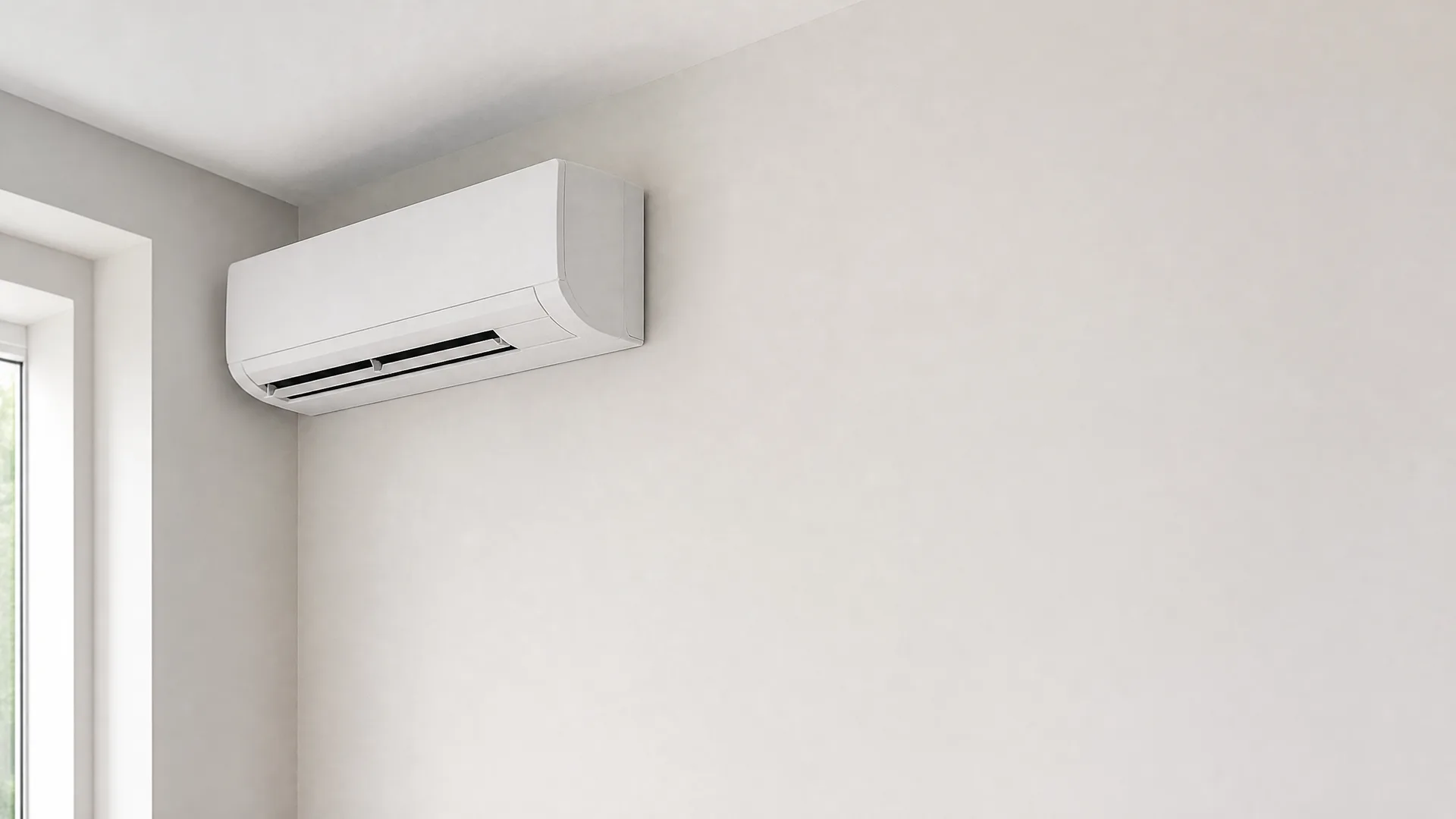
A mini split that's too big for the room cools the air fast and shuts off before it runs long enough to pull the moisture out. You'll notice it most on a warm, still afternoon. The thermostat says the room hit temperature, but the air still feels heavy. It keeps shutting on and off instead of running steady, and each start pulls a burst of power. On a power bill like Maine's, those bursts add up faster than steady running would.

A unit too small for the space never gets ahead of the load. It runs flat out for hours and still can't hold the room where you set it, especially in a room with a cathedral ceiling or a wall that faces north. You'll feel it as a room that's close but never quite there. Since most Maine homes still lean on oil for the bulk of their heat, that mini split is carrying cooling alone, and if it's undersized, it's working hard for a result that falls short.
You might notice the unit running almost constantly on a warm afternoon, never shutting off, while the room still feels sticky instead of cool. Or the opposite: it blasts cold air, hits the set temperature in a few minutes, shuts off, and the room feels clammy again within the hour. You might hear it cycling on and off more than it seems like it should. If one room stays comfortable while another never quite gets there, that's usually a sign the unit was sized for the house in general rather than for that specific space. Left alone, the wrong size unit runs harder than it needs to, and the parts inside wear faster from the constant starting and stopping.


A contractor measures every room, not just the square footage total.
They check window size, direction, and ceiling height room by room.
They run a Manual J calculation to find the actual heat gain.
They match the unit's BTU output to that number, not a chart.



Maine summers don't carry the heavy air you'd get further south. Averaged across June, July and August, the dew point here runs 59°F, which is on the dry side as these things go. That changes what sizing a mini split means for you. A unit that's too big can still drop the temperature fast, but with air this dry it won't feel like it's failing to pull moisture out, because there's less moisture to pull. The size mistake shows up differently here: in a power bill from a unit that short cycles, not in a room that feels clammy. Source: NOAA climate normals
NASA POWER T2MDEW county cells weighted by homes
The right size mini split for your Maine home comes from a room by room load calculation, not a chart that only looks at square footage. Your ceiling height, your windows, and the heat your oil system or baseboard isn't reaching all change the number. Get that number wrong and you pay for it on a power bill that's already among the highest in the country, whether the unit is too big and short cycles or too small and runs without catching up. You don't have to work out that number yourself. Send in what you know about your house and a contractor who sizes these units for Maine homes will take it from there, checking the rooms and running the calculation properly. Once that's sent, the sizing isn't something you have to figure out alone anymore. It's off your plate, and you'll know the unit going in is matched to your house instead of a guess off a chart.
Send the form and stop researching installers for the new mini split.