
A white wall-mounted mini-split indoor unit on a gray interior wall above a beige sofa, with a framed picture, a floor lamp, wood slat wall trim, and a window showing green foliage.

Skip calling around

What defrost mode means on a Maine mini split

Your mini split is blowing cold air, or the outdoor unit is sitting there iced over, and you want to know if that's normal. This page explains what defrost mode is and when it points to real trouble. Below that, skip the search for a Maine contractor who knows this equipment and get matched with one licensed tech instead of a pile of callbacks.

Skip the calls

Defrost mode is your mini split clearing frost off the outdoor unit's coil. In a Maine winter, that coil runs cold enough to pull moisture out of the air, and that moisture turns to frost on the metal. Once frost builds up, the unit reverses itself for a few minutes, sends warm refrigerant outside to melt it off, and that's why the fan inside blows cool or room-temperature air during that stretch instead of heat. You might also see steam coming off the outdoor unit, or notice it cycling this way several times on a cold, damp day. That's normal operation, not a malfunction, and it should end on its own within ten or fifteen minutes. What's worth paying attention to is an outdoor unit caked in ice that never clears, or a system stuck blowing cold air well past that window. That points to something else going on, like a fan that isn't running or a refrigerant charge that's off, and that's worth having looked at by someone who knows the equipment.

  1. The outdoor coil gets cold enough that frost starts forming on it.

  2. A sensor reads the coil temperature and tells the board it's iced.

  3. The reversing valve switches so the system runs in reverse, like your AC in winter.

  4. Hot refrigerant flows through the outdoor coil and melts the frost off it.

Why does your mini split feel cold and sound different right now

You'll notice the indoor head blowing cool or even cold air for a few minutes, maybe a low whoosh or a clunk as the valve switches over, then warm air again once it's done. Outside, you might see steam rising off the unit as the frost melts away. That's the normal part. What's not normal is ice that stays past a cycle or two, a fan that won't turn, or a unit that's gone into defrost three times in an hour. If the coil stays iced, the unit can't pull heat from the outside air, so it leans harder on backup heat or just stops keeping the room warm. With oil prices what they are in Maine, a mini split that's not actually heating is a bill you're paying twice.

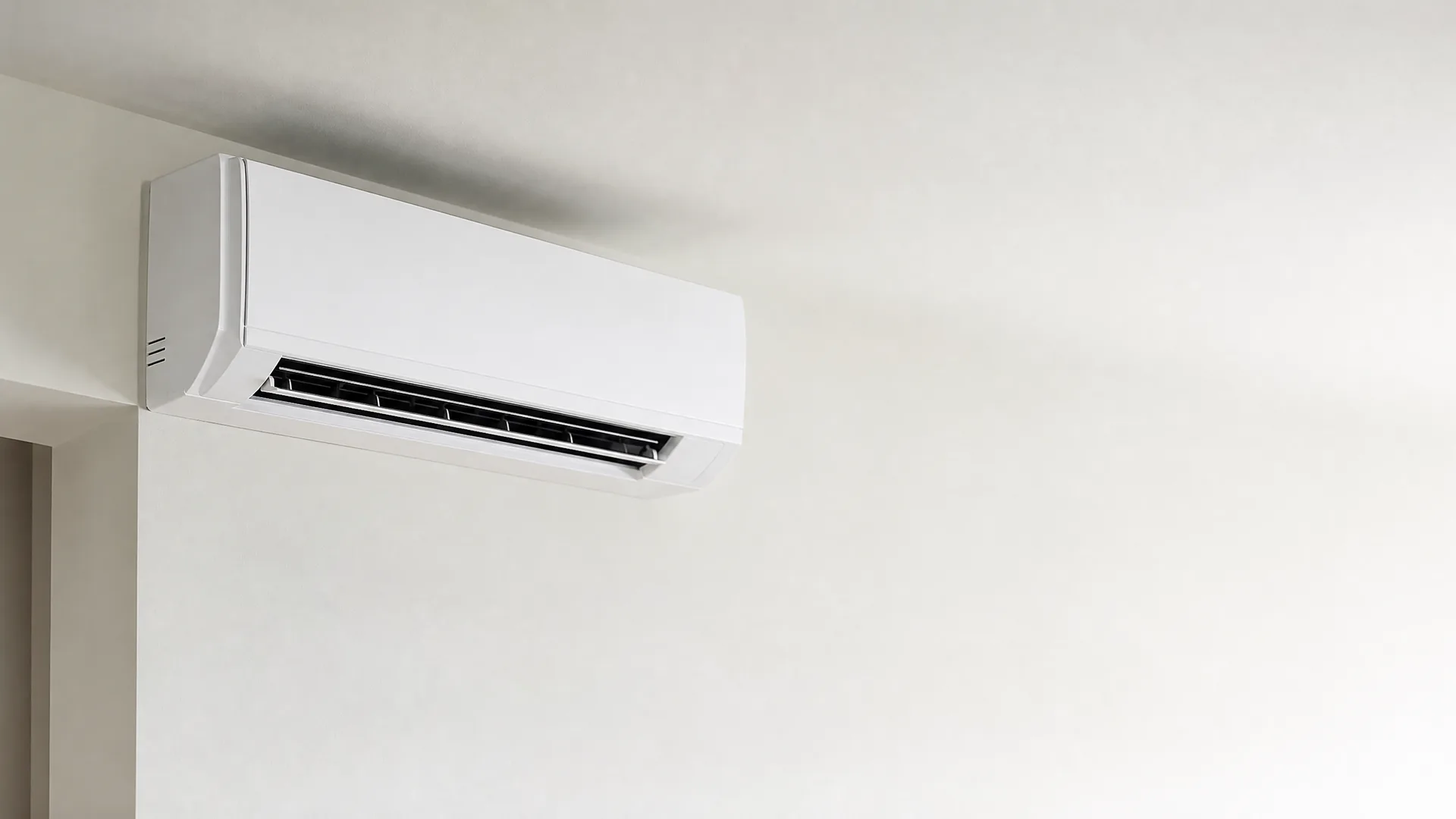
A white wall-mounted mini-split air conditioner unit near the ceiling on a plain light-colored interior wall with open space to the right.

How often defrost should run

On a cold, damp day, defrost might kick in every forty five minutes to an hour, run for five to ten minutes, then let the unit go back to heating. How often it cycles depends on the outdoor temperature and the humidity in the air that day. A dry, cold stretch means less frost and fewer cycles. A damp day near freezing, which is when coastal Maine sees the most coil icing, means more of them.

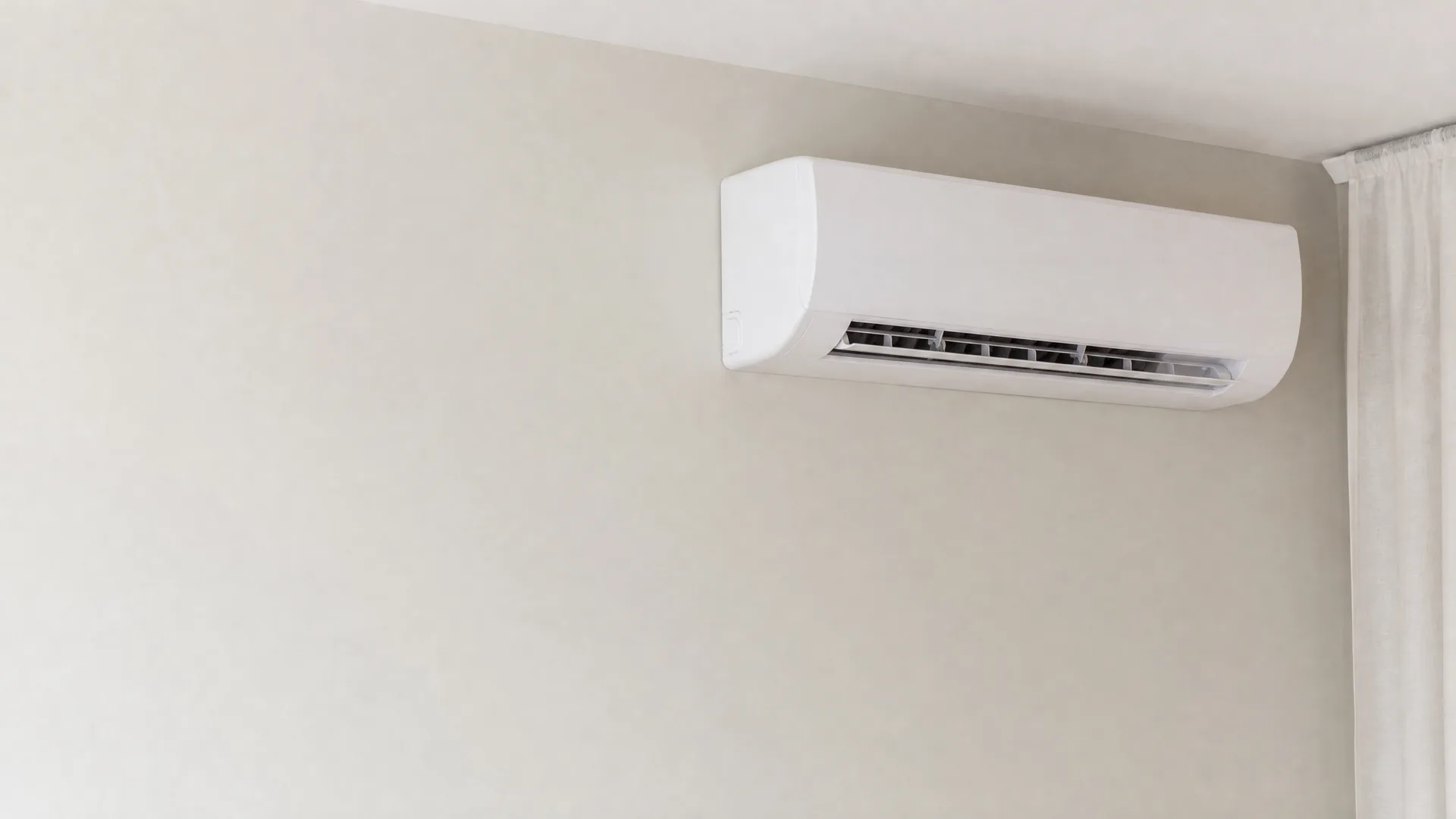
A white wall-mounted mini-split air conditioner unit installed near the ceiling on a plain beige interior wall, with a light curtain at the right edge.

When the coil should clear

A normal defrost cycle melts the frost off the coil and shuts itself down once the sensor reads a clear coil, usually within ten minutes. If you go out and the outdoor unit is still caked in ice after sitting through a cycle, or the ice has built up thick along the bottom near the base pan, the unit isn't clearing itself the way it should. That's the sensor, the reversing valve, or the refrigerant charge not doing its job, and it needs someone to look at it.

Normal Defrost or a Real Problem

Normal defrost

  • Defrost ends on its own, usually inside ten minutes, and the unit goes back to heating without you doing anything.
  • The outdoor fan is off or slow during the cycle, and steam or water coming off the coil as it warms is just melting frost.
  • It happens more on cold, damp days and less during a dry cold snap, because frost needs moisture in the air to form.
  • Indoor air runs cool or neutral for a few minutes, not warm, and that's the heat being pulled to the outdoor coil instead.
  • A puddle under the outdoor unit afterward is the frost draining off, not a leak.

Something's wrong

  • Defrost runs but the coil stays iced over afterward, or ice builds back up within minutes of the cycle ending.
  • The unit is stuck in defrost, blowing cold indoors for much longer than ten minutes with no return to heat.
  • Ice is covering the whole outdoor unit, including the fan blades, not just a layer of frost on the coil.
  • Defrost is kicking in every few minutes instead of settling into a longer cycle, even on a steady cold day.
  • The outdoor fan isn't running at all between defrost cycles, or you hear it straining to turn against the ice.
A white wall-mounted mini-split air conditioner near the ceiling of a room with light gray walls, white crown molding, and a beige curtain at the left edge.

What a normal cycle looks like

The coil goes through defrost, sheds the frost, and the unit comes right back to heating. The wall stays clean, no streaking, no buildup around the housing. This is a unit doing what it's built to do on a cold Maine night.


A dusty beige wall-mounted mini-split air conditioner indoor unit installed high on a plain light-colored wall below the ceiling.

What trouble looks like

That grime and the dark staining above the unit aren't from defrost. A coil caked with dust can't shed frost the way it should, so defrost runs longer and more often, and the staining points to moisture going somewhere it shouldn't. That's a job for someone who services this equipment all year and can tell you what's actually wrong.

Why does my mini split go into defrost in the middle of the day?

You expect defrost at night, when the cold is worst. So when the outdoor unit kicks into that cycle on a bright afternoon, it feels off, like something's wrong even though the temperature outside doesn't seem that extreme to you.

Defrost runs on coil temperature and humidity, not the clock

Frost forms on the outdoor coil whenever the coil surface drops cold enough to pull moisture out of the air, and that can happen at noon just as easily as at midnight. A damp, overcast day in the 30s can load the coil with frost faster than a clear, dry night at 20. The board is watching a sensor on the coil, not a schedule, so it triggers whenever that reading says ice is building up. If the air is heavy with moisture off the coast or after snow, expect more frequent cycles regardless of what the sun is doing. It's the coil's temperature and the air's moisture that decide, nothing else.

A man with grey hair and stubble in a dark sweater sits on a grey sofa indoors, looking off to the side, with a potted plant and a sunlit window behind him.
A man with gray hair, a beard and glasses, wearing a dark green sweater, sits on a gray sofa in a sunlit living room with a potted plant, table lamp and wooden sideboard behind him.
A middle-aged man with graying hair and a short beard sits on a blue sofa in a living room, looking toward a window, with a bookshelf, lamp and framed picture in the background.
A man with graying curly hair and a dark green sweater sits on a gray sofa in a sunlit living room, looking off to the side, with a framed picture, shelving, an armchair and a window with sheer curtains behind him.

Describe it once

The pro who reaches out is licensed in Maine.

No fee to send it, and nothing to sign.

Frost that comes back fast

If the coil ices over again within the hour after a defrost cycle finishes, something's off. A healthy unit sheds frost and stays clear for a while before it needs to run defrost again. Short, repeating cycles usually mean the coil isn't getting fully clear each time, or the refrigerant charge is low. Either one makes the unit work harder for less heat, and on a cold night that shows up fast as rooms that won't come up to temperature. This is worth having a contractor look at before it turns into a system that can't keep your house warm when you need it most.

Ice that won't melt off

A normal defrost cycle ends with a clear coil and maybe some water or steam dripping off as the frost melts. If you're seeing solid ice building up on the unit, around the base, or on the lines running to the house, the system isn't defrosting the way it should. That can mean a stuck reversing valve, a bad sensor telling the board the coil isn't iced when it is, or a fan that's not clearing meltwater fast enough. Left alone, a unit icing over like that will keep losing heating capacity through an oil-heated Maine winter.

A woman with shoulder-length brown hair wearing a beige knit cardigan sits in a gray upholstered armchair near a window, looking off to the side with a slight smile, with bookshelves blurred in the background.
A woman and a sleeping child wrapped together in a cream knitted blanket on a couch, with a potted plant, framed photo and lit lamp in the background.

The board controlling your mini split doesn't start a defrost cycle just because it's cold out. It watches a sensor on the outdoor coil, and it waits until that reading matches what a timer says is likely, before it reverses the system. That's why defrost doesn't fire on some fixed schedule. It fires when the coil is actually icing. While that's happening, the indoor head isn't trying to heat the room. Its fan slows down or stops so you're not sitting under a stream of cold air, and some models put a small snowflake symbol on the head or remote so you know what's going on instead of wondering if something broke. The compressor keeps running the entire time, moving refrigerant through the system to carry heat to that outdoor coil and melt the frost off it. That's the same coil that pulled heat out of the cold outdoor air in the first place, cold enough to frost over, which is the whole reason defrost exists. Once the sensor reads warm enough, the cycle ends on its own and the system switches back to heating.

How defrost actually gets triggered

  • Defrost mode runs on a timer and a temperature reading together, so the board only starts a cycle once both say the coil is actually icing.
  • The indoor head's fan usually slows way down or stops during defrost so cold air doesn't blow into the room while the system is in AC mode.
  • Some units show a small snowflake icon or light on the indoor head or remote so you know it's in defrost and not malfunctioning.
  • The outdoor unit pulls heat from the air even in cold weather, and that's exactly what makes the coil cold enough to frost over in the first place.
  • A defrost cycle ends automatically once the coil sensor reads a warm enough temperature, not on a fixed timer alone.
  • Refrigerant does all the work moving heat during defrost, which is why the compressor keeps running the whole time even though you don't feel warm air yet.
A white wall-mounted mini-split air conditioner indoor unit installed near the ceiling on a plain light-colored wall, with its horizontal outlet vent and louvers visible.
Before you get your mini split repair
A white wall-mounted mini-split air conditioner on a beige interior wall, with a curtained window on the left and wood flooring with a light rug below.
After you get your mini split repair

Power costs 27.69 cents per kilowatt-hour statewide

At 27.69 cents per kilowatt-hour, every extra minute your mini split spends in defrost instead of heating shows up on your bill. A unit that's icing too often and running long defrost cycles is pulling more power to make the same heat, which matters most with Maine power costing what it does.

EIA-861 2025 statewide residential average

A white wall-mounted mini-split air conditioner on a beige interior wall, next to a window with sheer white curtains and green foliage outside.
A clean coil and housing let the unit cycle through defrost on its own schedule and get straight back to heating.
A dusty, discolored wall-mounted mini-split air conditioner indoor unit on a plain white wall, with its horizontal louvers and vent grille visible.
Dust packed into the vents and coil makes the unit work harder to shed frost, and that's when defrost stops being routine.
Single-story house with tan horizontal siding and a dark shingled hip roof, fronted by a patchy green and brown lawn and a concrete walkway leading to the covered entry.

Summer here doesn't ask much of your mini split in cooling mode. Maine summers run mild, with a dew point that averages 59°F across June, July and August, according to NOAA climate data. Air that dry doesn't make the coil work hard to wring moisture out, so you won't see the heavy condensation or constant runtime that units deal with further south. That matters because the same unit carrying your heat all winter gets an easy season in between to just keep up, not strain. If you notice icing or rough cycling once the cold sets back in, it's not summer wear catching up with it.

NASA POWER T2MDEW county cells weighted by homes

A closed laptop and a cream mug of coffee on a coaster sit on a dark wooden table, with a potted plant at left and a kitchen counter, tiled backsplash and shelf of ceramics in the background.

Defrost on its own is normal. Frost that keeps coming back isn't.

A mini split clearing frost off its outdoor coil a few times on a cold night is just doing its job. What's worth a call is frost that returns within the hour, a unit stuck blowing cold air well past ten minutes, or ice building up around the housing instead of melting off clean. Those are signs the system is working harder than it should to make the same heat, and on Maine power rates that shows up on your bill before it shows up as a breakdown.

If that's what you're seeing, you don't have to spend an evening looking up mini split contractors near you, calling a few, and walking each one through the same description of what the outdoor unit is doing. This connects you with one licensed contractor in Maine who works on these systems all winter and knows what a bad reversing valve or a dirty coil sensor looks like versus a unit doing what it's supposed to. One call, one visit, and you know where you stand.

A living room corner with a light beige sofa holding a textured taupe cushion, a large ceramic vase of olive branches by a window, a framed neutral artwork on the wall, and a dark bowl with stacked books in the foreground.
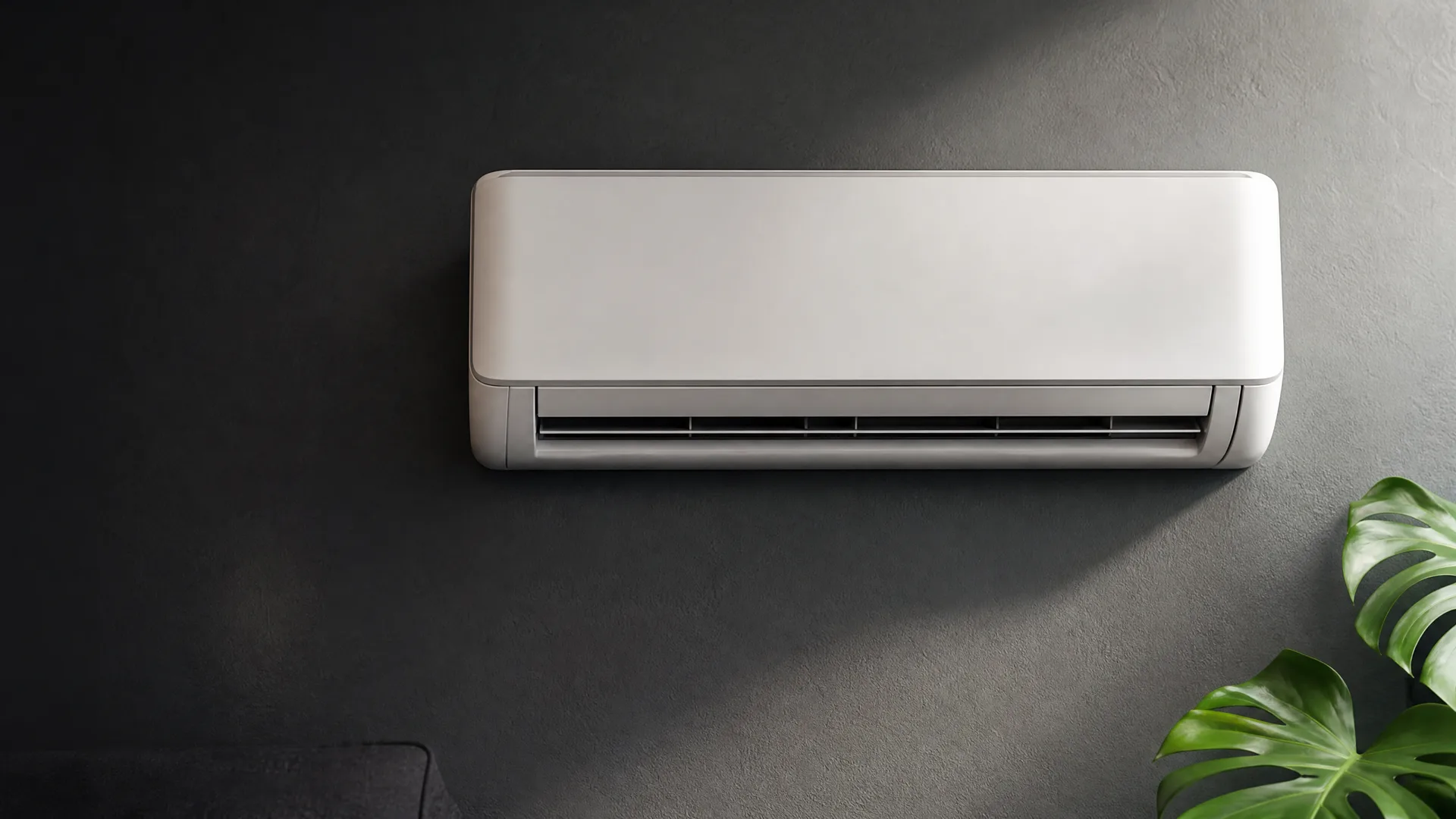
A white wall-mounted mini-split air conditioner on a dark grey textured wall, with a monstera plant leaf at the lower right corner.

No phone calls to make

Step 1 of 3: Equipment