1 degree off
A refrigerant charge even slightly low makes the compressor run longer to hit the same temperature, and that shows up on the power bill all summer.
 Get matched
Describe your mini split job, and a local pro who handles it gets in touch.
A mini split works harder in Maine than its size suggests. It carries you through the warm months when the air sits heavy with moisture, and in a lot of homes it's running right alongside the oil furnace all winter, taking the edge off so the furnace cycles less. Either way, it runs on electricity, and you already know what that costs here. A unit that's losing efficiency doesn't announce itself. It just costs more every month until something fails outright.
Finding someone to look at it is its own chore. You'd be searching for contractors who actually work on ductless systems, not just central air. Calling a few, explaining what you have and where you live, waiting on callbacks, then doing it again with the next name on the list. Comparing quotes that aren't quite comparable because nobody looked at the same thing. That part is work before any work gets done.
This page skips that part. Answer a few questions about your mini split and your situation, and you get matched with a contractor who handles this equipment and takes calls in your area. They reach out to you, not the other way around. No sitting on hold, no explaining your indoor and outdoor units to three different receptionists.
What you get from the match is a contractor suited to your specific setup, whether that's a single head in one room or a multi-zone system covering most of the house. What they find once they're in front of it, and what they recommend, is between you and them. The point of this page isn't to do that work. It's to get you to the person who can, without the usual runaround of finding them yourself.
Below is what a tune-up on a system like yours typically involves, so you know what to expect before anyone shows up.
A mini split tune-up covers cleaning the indoor filters and coil, checking the outdoor unit for ice or blocked airflow, testing refrigerant pressure, and making sure the condensate drain is clear so the unit isn't shedding water where it shouldn't. In Maine, the outdoor coil is the part that matters most. When a mini split runs through the cold months alongside an oil furnace, that coil can frost over if airflow is restricted or refrigerant is low, and a frozen coil stops the unit from moving heat at all. A tune-up catches that before it becomes a cold room or a system that won't defrost on its own. It also means the unit isn't working harder than it has to, which matters on a Maine power bill. None of this is a one-time fix. A unit that gets checked each year keeps running the way it did when it was new, through the humid months and the ones where it's propping up the furnace.


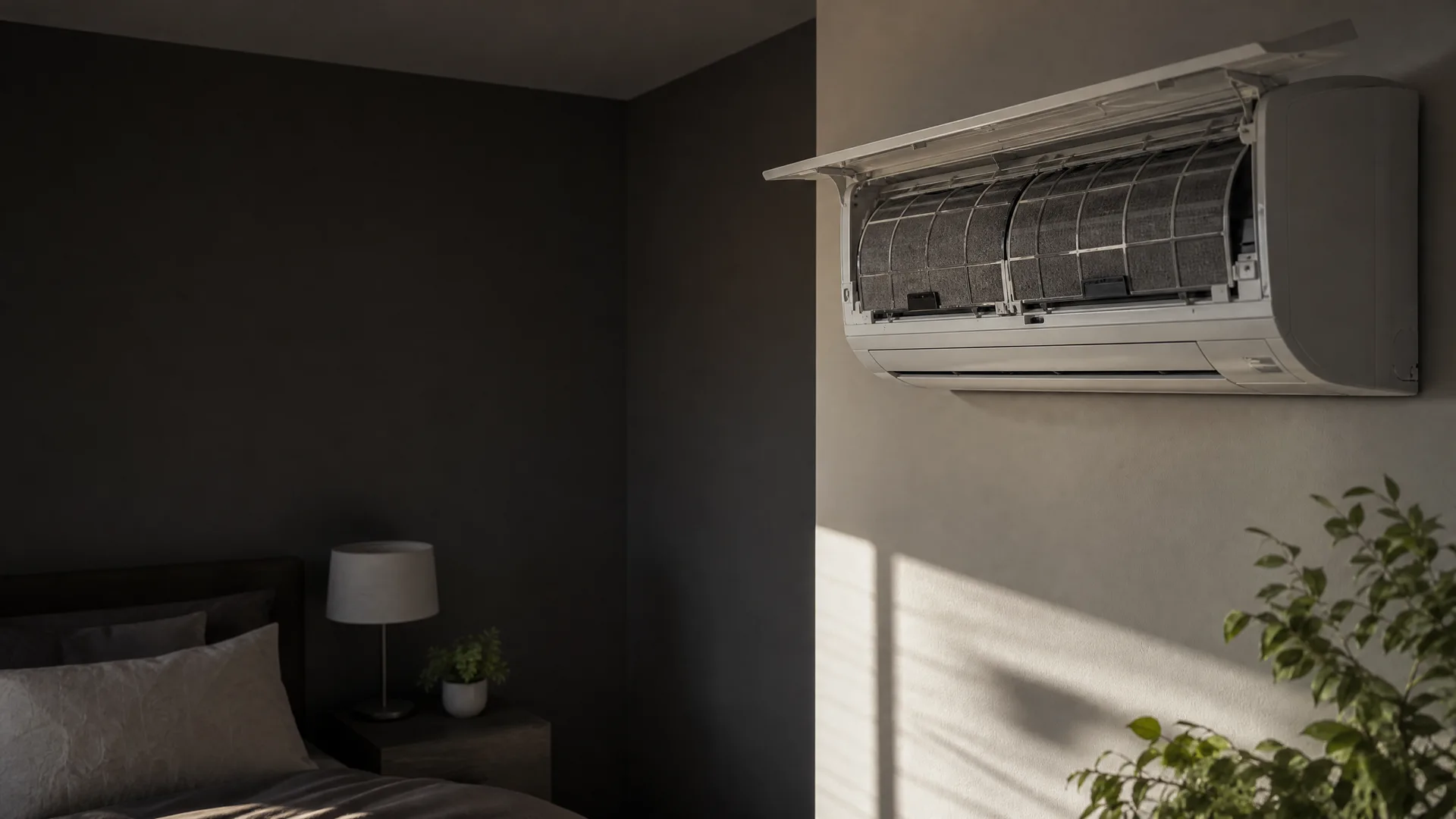
You pull the cover off the indoor unit to dust the blinds before putting the window screens in for the season, and the filter screen underneath stops you. It's gone from white mesh to a flat grey felt, the kind of dust that packs in over a winter of running alongside the oil furnace. Light from the window catches it. You run a finger across it and the line you leave stays clean against the grey. The room's warmed up enough the last few afternoons that you'll want this thing blowing cool air before long, and looking at that screen, you're not sure it's ready to.
A tune-up matters more here because a mini split in a Maine home is rarely just coasting through a few mild months. It's pulling damp out of the summer air and helping carry the load next to an oil furnace come winter, with electricity rates what they are. A unit that's losing efficiency to a dirty coil or a weak charge costs you more every month it runs that way, quietly, before anything breaks outright. Finding someone to check it means calling around to see who works on mini splits, explaining the setup each time, and weighing quotes against each other with no easy way to tell who's actually worth hiring. That's the part worth handing off. You've got a system that runs most of the year in both directions, heat and cooling, and getting it looked at before the season you need it most is worth more than doing that legwork yourself.
A tune-up follows a set order, and each step catches something the one before it can't. Refrigerant charge gets checked first, at the service port on the outdoor unit, because pressure there tells a technician whether the system has the right amount to begin with. Low charge shows up as a unit that runs long and still doesn't cool the room. From there the work moves to the coils. The indoor coil collects dust off the air it's pulling in, and that layer acts like a blanket, so the unit has to run longer to move the same amount of air through it. The outdoor coil and fan get the same attention, since leaves, pollen or anything stacked against the housing forces the compressor to work past what it should. The condensate line gets flushed next. Mini splits pull a surprising amount of water out of summer air, and if that line clogs, the water has nowhere to go but back into the indoor unit. Electrical connections at the outdoor disconnect get tightened, since a connection that's worked loose over a season of vibration is the usual reason a breaker trips on the hottest day rather than any problem with the breaker itself. Last is the blower wheel, checked for the same dust buildup that slows the coil, because a dirty wheel changes how much air actually reaches the room on each cycle.


A refrigerant charge even slightly low makes the compressor run longer to hit the same temperature, and that shows up on the power bill all summer.
The indoor and outdoor coils both have to be clean for the unit to move heat efficiently. Dust on either one makes the whole system work harder.




At almost 28 cents a kilowatt-hour, every extra minute your compressor runs to make up for a dirty coil or low charge costs more here than almost anywhere else. A tune-up keeps that cost from creeping onto your bill month after month.
EIA-861 2025 statewide residential average

A clean filter, a clear drain, the right refrigerant charge. That's what keeps your mini split pulling moisture out of the summer air and carrying its share of the heat load next to the oil furnace come winter, without running longer than it should on a power bill that's already among the highest in the country.
Finding someone to do that work is its own chore, calling a few places, explaining the same thing twice, waiting on quotes that don't line up. Once you're matched with a contractor who works on mini splits in your area, that part is done. They'll reach out to you directly, and you're left with your evenings back for whatever actually matters to you.


Fill out one form instead of calling around for a mini split tune-up.