Profile view of a bearded man wearing a dark baseball cap and a dark gray T-shirt against a plain off-white background.

How cold is too cold for a mini split in Maine

Step 1 of 3: Equipment

Most mini splits start losing real heating power somewhere around 5 degrees Fahrenheit, and below that, the unit has to work harder for less heat. The reason is the outdoor coil. It pulls heat out of the air to warm your home, and the colder the air gets, the less heat there is in it to grab. Maine winters routinely drop well below that mark, which is why a mini split alone usually can't be the only heat source here. Cold climate models are built for this and keep producing heat down into negative temperatures, but even those lose some output as it gets colder. This matters most if you're counting on a mini split to replace or supplement an oil furnace. The right unit, sized and installed for Maine winters, still earns its keep most of the year. It just needs backup on the coldest nights, and which model handles that well depends on your home.

A white wall-mounted mini-split air conditioner on a beige interior wall, with a curtained window on the left and wood flooring with a light rug below.
Above 5 degrees, the unit cycles normally and keeps the room at temperature without strain.
A white wall-mounted mini-split air conditioner indoor unit installed near the ceiling on a plain light-colored wall, with its horizontal outlet vent and louvers visible.
Below that, the coil works harder for less heat, and the system may run constantly without catching up.
A gray-haired man in a dark long-sleeve shirt sits on a gray sofa in a living room, looking toward a sunlit window with sheer curtains.
A gray-haired man in a dark green sweatshirt sits on a sofa in a living room, looking toward a bright window, with a houseplant, lamp, fireplace and framed art behind him.
A gray-haired bearded man in a dark green collared sweater sits on a sofa in a living room with a window, houseplant, floor lamp and bookshelves, looking off to the side.
A gray-haired man in a dark green sweater sits on a sofa in a sunlit living room, looking off to the side, with a framed landscape painting, dining table and shelving behind him.
A woman stands in the open doorway of a white stucco house holding the dark door, facing a man in a black cap and shirt seen from behind in the blurred foreground, with a potted flowering plant beside the entry.

On the nights Maine gets coldest, your mini split is working hardest

Most homes here heat with oil, and a lot of mini splits in Maine are set up to help the oil system, not replace it. If yours is wired and sized for that job, a night at 10 below isn't a surprise to the system, it's what it was installed to handle. If it was put in without that in mind, you'll feel it in the rooms farthest from the unit first, and you'll hear the outdoor unit running without much to show for it.

Getting that balance right, how your mini split and your oil heat are supposed to share the cold nights, comes down to how it was installed, not the brand on the box. A contractor who works on heat pumps in Maine winters every year knows what a unit needs to actually carry a room when the temperature drops, and what size and setup just leaves you cold and running the oil burner anyway. Asking about a new install or a second opinion on your current one puts you in touch with one licensed contractor local to you, matched to what your house needs, who will follow up directly.

Interior corner of a dining room with a round wooden table, a ceramic vase holding olive branches, a dark spindle-back chair near a curtained window, and a sideboard with a lamp against beige walls.
A white wall-mounted mini-split air conditioner on a beige interior wall, next to a window with sheer white curtains and green foliage outside.

Running the way it should

This is a mini split on a normal night, cycling on and off, keeping the room steady. Nothing straining, nothing running nonstop. Whether it holds up in a January cold snap comes down to how it was sized and installed for your home.

A dusty, discolored wall-mounted mini-split air conditioner indoor unit on a plain white wall, with its horizontal louvers and vent grille visible.

A unit nobody's checked on

Dust and grime like this across the coil and vents block airflow long before the cold does. A unit working that hard to breathe will struggle on a cold night regardless of the temperature outside. A local installer can tell you if what you have was set up right in the first place.

Is your mini split running nonstop and not keeping up

You'll notice it first on the coldest nights. The unit never seems to shut off, the air coming out feels cooler than usual, and the room still doesn't hold the temperature you set. Some units ice up on the outdoor coil, or you'll hear the compressor working harder than it does in milder weather. If the mini split is your main heat and it was sized or installed without that in mind, this is where it shows. The oil furnace backing it up will pick up the slack, and on a hard cold snap your oil use and your bill climb faster than you'd expect from the thermostat setting alone.

  1. Indoor air passes over a refrigerant coil and gives up its heat.

  2. Cold refrigerant carries that heat outside through the line set.

  3. The outdoor coil pulls heat from the outside air, even when it's cold.

  4. A compressor raises the refrigerant's pressure and temperature.

A woman with shoulder-length dark brown hair in a cream knit cardigan sits in an upholstered armchair beside a window, looking off to the side, with a white bookshelf and potted plant blurred behind her.
A woman with dark hair in a bun sits wrapped in a chunky knit blanket on a couch with a child resting his head on her shoulder, eyes closed, beside a lit lamp and bookshelf indoors.

Get your mini split to the right pro

One installer gets your project, so there's no bidding war over it.

Asking costs nothing, and the choice to hire stays yours.

A wall-mounted mini-split air conditioner indoor unit with a dusty beige casing and dark louvered vent, installed near the ceiling on a plain beige wall.
Before you get your mini split installation
A white wall-mounted mini-split indoor unit installed high on a gray interior wall, with a sofa, dark table and window visible in an adjoining room to the right.
After you get your mini split installation

A mini split rated for cold climates uses a compressor built to ramp up output as the air gets colder, which is why two units with the same size label can perform very differently at 10 below.

That rating, and the sizing behind it, is set at installation. Get that part wrong and no amount of run time will keep the room warm on the coldest night.

Power costs 27.69 cents per kilowatt-hour statewide

At that rate, a mini split that's undersized or struggling to keep up on cold nights doesn't just run longer, it costs more every hour it does. With oil as the backup here, a unit sized and installed right is worth more in Maine than almost anywhere else.

EIA-861 2025 statewide residential average

Where this leaves you

  • A mini split losing power below 5 degrees is normal; one that can't keep the room warm on a 20 degree night usually points to sizing or setup, not the cold itself.
  • Maine winters put a mini split through more cold nights below 5 degrees than most of the country ever sees.
  • A contractor who installs and services these units in Maine every winter knows which models hold output in a cold snap and which ones fade.
  • Pairing the mini split correctly with an oil backup takes someone who's set up that handoff before, not a general installer guessing at it.
  • Matching you with one licensed local contractor means a single qualified installer looks at your home, not a handful of companies competing for the job.

Cold air alone doesn't explain a mini split that can't keep up. Every unit loses some capacity once the temperature drops below 5 degrees, that part is just how the coil works. What separates a normal cold night from a problem is whether the room still holds its temperature once that happens. If it doesn't, the issue usually traces back to how the system was sized and installed, not the weather itself.

Maine sees more nights below that mark than most places, and that matters more here than almost anywhere else, since the backup running when the mini split falls behind is often an oil furnace burning fuel at today's prices. Getting the sizing and the handoff between the two systems right the first time is worth more here than it would be somewhere with milder winters or cheaper heat.

That's the kind of work that comes from having done it before, on homes like yours, in winters like the ones Maine actually has. A contractor who installs and services these systems through a full Maine winter has seen which units hold their output at 10 below and which ones start struggling long before that. When you put in a request here, it goes to one licensed local contractor who fits what your home needs, not a handful of companies all bidding for the same job.


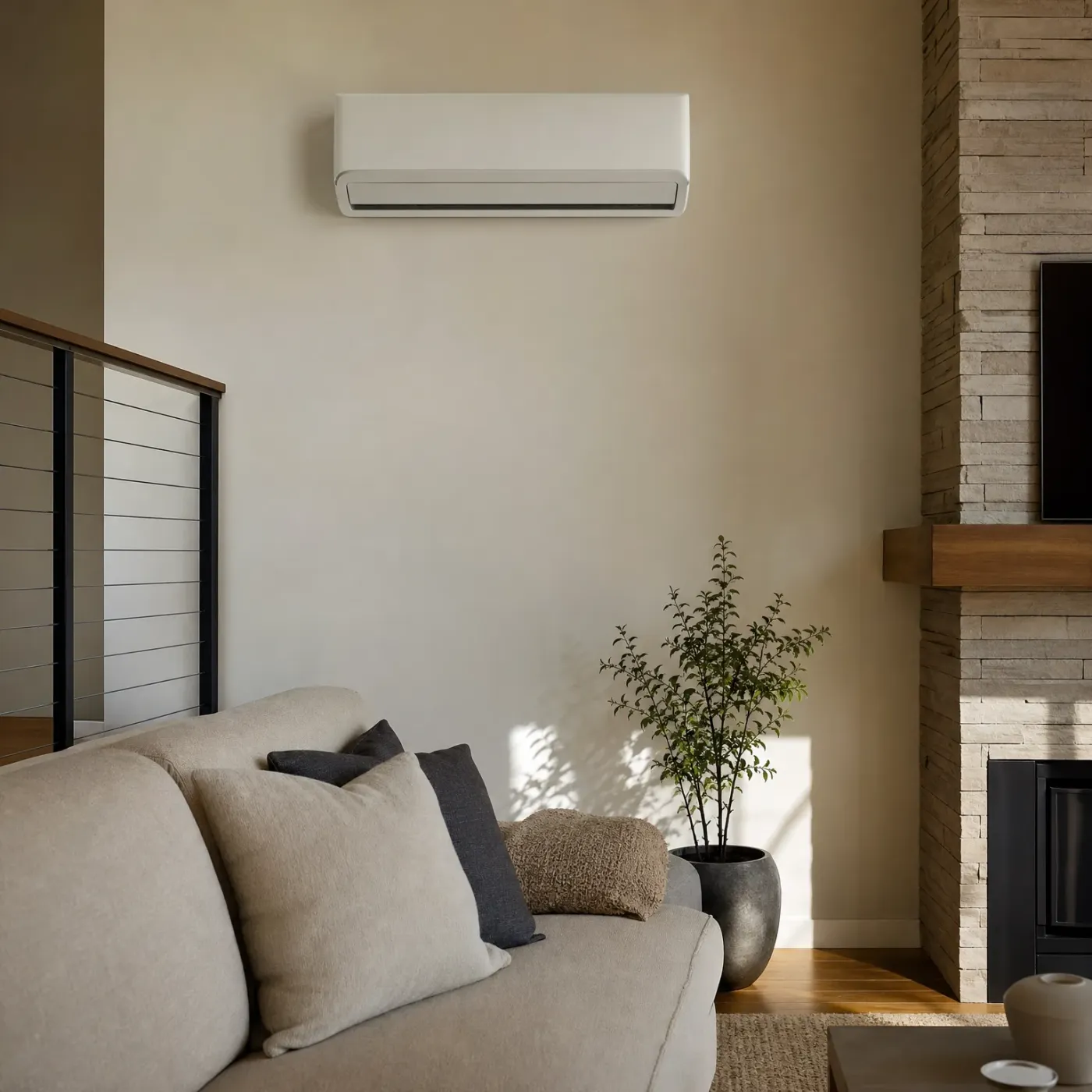
Interior living room with a white wall-mounted mini-split air conditioner high on a beige wall, a light gray sofa with cushions, a potted small tree, a stacked-stone fireplace with wood mantel and mounted TV, and a cable railing at left.

The right pro for this job

Connect with a pro

Only one pro gets your request, so you hear from one company.

No fee to send it, and nothing to sign.