Can a mini split heat a basement in a Maine winter

A local installer who puts in mini splits gets your project.

Find my pro

Can a mini split heat a basement in a Maine winter?

A basement is a harder room to heat than the rest of the house. It sits below grade, it's often the farthest point from your oil furnace's ductwork, and if you're asking this question, you're probably picturing a cold January night and wondering if a mini split alone can carry the load down there.

Yes, if it's sized and installed for the coldest nights you get

A cold-climate mini split is built to keep producing heat well below freezing, down into negative temperatures, which is exactly what Maine winters bring. The unit pulls heat from outside air using a compressor designed for that range, not the standard models sold in warmer states. What matters most is sizing it to your basement, not just its square footage but how much heat escapes through the foundation walls and how exposed the room is. A unit sized too small will run constantly and still lose ground on the coldest nights. Sized right, it can be the only heat source that basement needs, oil furnace or not.

A dusty, stained white wall-mounted mini-split air conditioner indoor unit installed high on a plain off-white interior wall near the ceiling.
Before you get your mini split installation
A white wall-mounted mini-split air conditioner unit installed high on a beige interior wall below white crown molding, with a window and woven shade at the left edge showing green foliage outside.
After you get your mini split installation

What makes it work down there

A mini split built for cold climates keeps pulling heat out of outside air well below zero, down to around negative 15 or colder depending on the model, which is the range a Maine winter actually hits. That's the part that matters for a basement. The outdoor unit doesn't care that the indoor head is below grade. What it's pulling from is the air outside, not the room it's heating. The indoor head itself sits on the wall and heats by moving air across a coil, no ductwork involved, so it doesn't lose anything trying to reach the far end of a duct run the way your oil furnace's basement vents sometimes do.

Sizing it to the room

A basement usually holds its temperature better than the rooms above it once it's warm, since the ground around it stays at a steadier temperature than the outside air does. That works against you if the unit is undersized, because it'll run constantly trying to catch up on the coldest days. It works for you once it's sized right, since the room won't swing the way an upstairs room with more exposed wall does. Getting the size right for your specific basement, not just a basement in general, is what a contractor who installs these in Maine every winter is going to walk through with you.

A woman with long gray hair wrapped in a checked blanket sits on a sofa by a window with yellow autumn foliage outside, with a lamp, framed picture and plant in the background.
An older woman in a cream knit sweater sits on a sofa by a window, looking out at sunlit trees with yellow and orange autumn leaves, with a bookshelf and lamp behind her.
A woman with gray shoulder-length hair in a dark knit sweater sits on a cushioned seat by a window, looking out at yellow autumn foliage, with a living room, armchair, houseplant and framed picture behind her.
An older woman with gray hair in a bun, wearing a cream knit sweater, sits on a sofa with a gray blanket and looks out a large window toward yellow-green autumn trees, with a lit table lamp and dark armchair behind her.
Single-story house with gray horizontal lap siding, dark shingled gable roof, a small covered front porch with a dark door, and windows, set behind a patchy green and brown lawn under a clear blue sky.

A Maine summer doesn't feel sticky the way it does farther south. The dew point averages 59°F across June, July and August, which is on the comfortable side as these things go. That matters for the mini split you're asking about, because the same unit that heats your basement in January also has to cool it in July, and it won't be working hard to wring moisture out of the air to do it. You'll notice it cycles off sooner than you'd expect, and the air it puts out feels cool rather than clammy. Source: NOAA climate normals.

NASA POWER T2MDEW county cells weighted by homes

One Head or a Whole System

One mini split head

  • One indoor head mounted in the basement heats that room and only that room, nothing else in the house.
  • Sizing is simpler because the contractor is matching one head to one space below grade.
  • If the basement is the coldest, hardest room to heat, a dedicated head can be set to run harder there without affecting bedrooms upstairs.
  • Install cost and the line set run are both smaller jobs than feeding multiple rooms.
  • It won't help your oil furnace's ductwork reach any other room that runs cold, so if the living room upstairs also struggles, this doesn't touch that.

Multi-zone system

  • One outdoor unit feeds several indoor heads, so the basement and a room or two upstairs can each get their own head off the same system.
  • Each zone has its own thermostat, so the basement can run warmer than the rest of the house without overheating anywhere else.
  • The outdoor unit has to be sized for the combined load of every head running at once, not just the basement.
  • A multi-zone system costs more upfront than a single head, and if one zone needs service the whole system is usually involved.
  • It makes sense if the basement isn't the only room fighting the oil furnace's reach, and you want to cover more than one space at once.
A white wall-mounted mini-split air conditioner on a beige interior wall, with a window at left showing trees and a wooden fence, and dark wood flooring below.

Right-sized for the basement

This is what a basement mini split should look like doing its job. Set it and the room holds its temperature through a cold night without the oil furnace fighting to push heat down there. A contractor who sizes it to the room and the walls around it gets you this.


A white wall-mounted mini-split air conditioner indoor unit with dark louvered vents, installed near the ceiling on a beige wall below white crown molding.

Undersized or poorly placed

A unit that's too small for a below-grade room, or mounted where cold air pools at floor level, runs constantly and still leaves the basement cold by January. Dust building up on a neglected unit is one sign it was never matched to the space it's heating.

Why does the basement never feel as warm as the rest of the house

You've probably already noticed it. The thermostat upstairs says 68 and the basement still feels like you need a sweater. Maybe there's a baseboard loop down there fed off the same oil furnace, and it runs most of the night without the room ever catching up. Maybe you've stopped sending the kids down to play after November because the floor stays cold no matter what the air does. If anyone's turned that space into a bedroom, a workshop, or a spot where pipes run along an outside wall, a basement that won't hold heat isn't just uncomfortable. It's the room most likely to see a frozen pipe or a space heater left running overnight, and that's worth taking seriously before the cold settles in for good.

  1. The thermostat calls for heat and the outdoor unit starts first.

  2. The compressor pulls heat out of the cold outside air.

  3. Refrigerant carries that heat through the line set into the basement.

  4. The indoor head blows warm air across the room from there.

A woman in a cream knit sweater sits in an armchair with her eyes closed and a slight smile, beside an open window showing orange autumn foliage, with a mug, books and a lit candle on a small side table.
An older man with gray hair and a beard leans back on a beige sofa with his eyes closed, in a sunlit room with potted plants, a wicker chair and large windows behind him.

Get your mini split to the right pro

Your request goes to one pro, not a list of companies.

No charge to send it. You decide if you hire them.

A white wall-mounted mini-split air conditioner unit installed high on a plain beige wall near the ceiling, with empty wall space to the right.

Running the oil furnace harder

If you skip the mini split, the only way to warm the basement is to push the oil furnace longer and hope enough heat finds its way down there through ductwork that wasn't built with that room in mind. The rest of the house ends up overheated while the basement still lags behind. Oil isn't cheap, and a furnace working overtime to chase one cold room burns more of it for a result that still falls short.

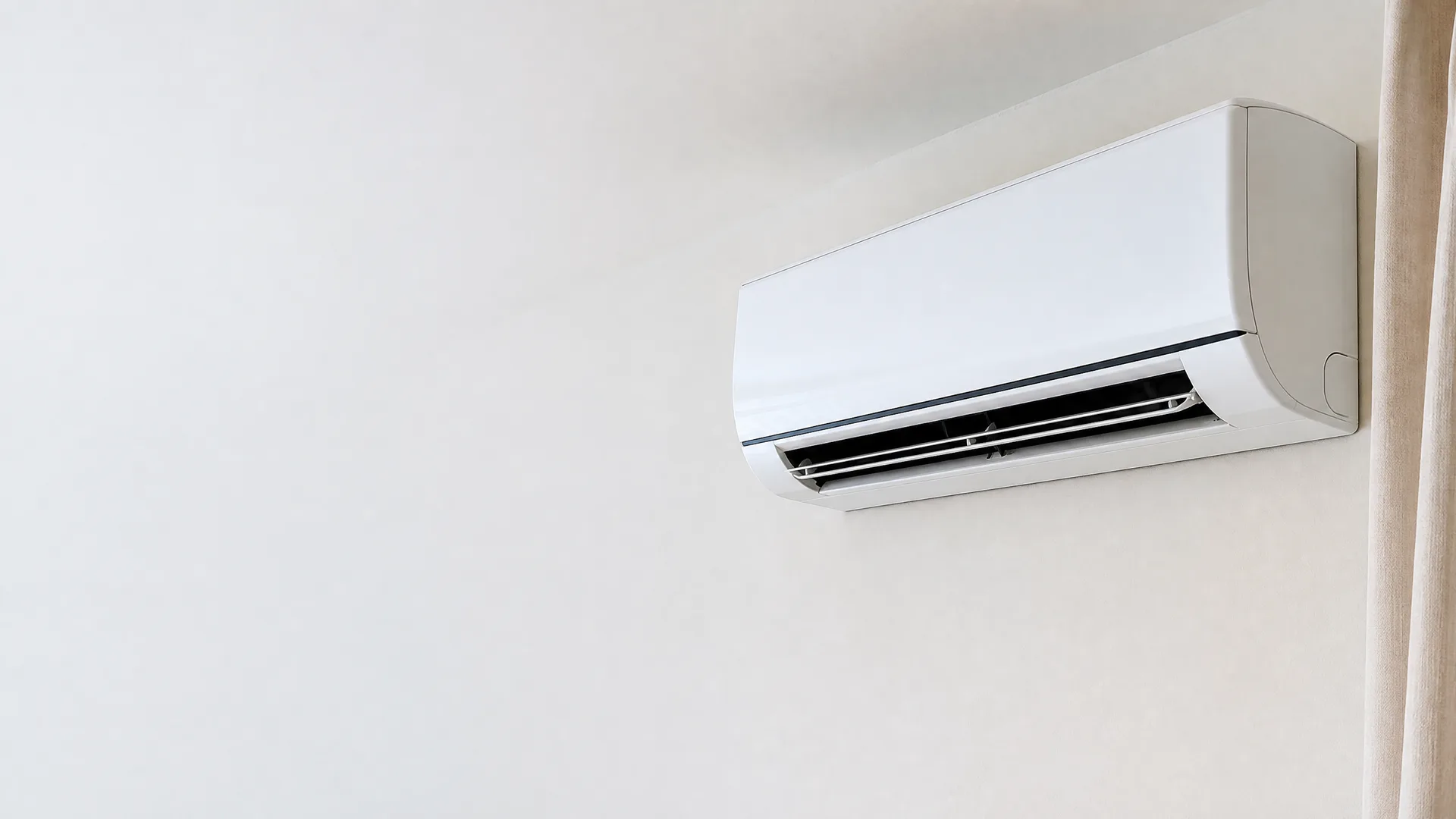
A white wall-mounted mini-split air conditioner indoor unit on a plain light-colored wall, with a beige curtain at the right edge of the frame.

Running a mini split instead

A mini split head in the basement heats that space directly, with its own thermostat and its own output matched to that one room. It doesn't rely on ducts or distance from the furnace. On a January night it holds the temperature there on its own, and the oil furnace isn't stuck trying to force heat into a room it was never good at reaching. A local contractor who installs these through Maine winters can size the head to the basement you actually have.

A woman in a cream cardigan and jeans stands with one hand raised facing an open front door of a gray horizontal-siding house, with a black lantern wall light, a potted shrub with yellow flowers, and a stone-faced porch column.

What this winter looks like with the basement finally warm

Right now you probably keep that basement door shut and write the room off from November to March. Maybe it's storage, maybe a workshop, maybe a spare room nobody uses because nobody can stand it. With a mini split running down there, you'd notice the floor isn't cold through your socks and the space holds heat overnight without you touching a thing. You'd also notice your oil furnace isn't working as hard to chase heat into a room it was never good at reaching in the first place.

Power costs a lot here, so the question of what runs that unit matters as much as whether it works. A basement mini split is one more line on the electric bill, set against less oil burned trying to do a job it can't do well. Getting that balance right for your house, your basement, and your oil system is exactly the kind of thing worth having a local contractor look at before winter, not during it. One who installs these in Maine basements every year can tell you, standing in your space, what size unit makes sense and where it should go.

A living room corner with a beige upholstered armchair holding navy and striped cushions, a small round wooden side table with a carved bowl and a potted green plant, a framed landscape picture on a pale wall, built-in shelving, and a curtained window.
A white wall-mounted mini-split indoor unit installed high on a gray interior wall, with a window at left and part of a light gray sofa with a dark cushion at lower right.

Clean and running the way it should

This is what a mini split looks like when it's keeping up with its job. Air moves freely through the vents, the casing stays clear, and the unit pulls the heat it's rated for out of the cold. A yearly check keeps it here.

A white wall-mounted mini-split air conditioner indoor unit with visible dust and staining along its lower vent, installed on a plain pale wall.

Dirt and mold along the vents

Buildup like this blocks airflow before the compressor ever gets involved. The unit works harder for less heat, and in a basement that's already the coldest room in the house, that's heat you can't afford to lose.

Power costs 27.69 cents per kilowatt-hour statewide

At that rate, how you run the mini split in the basement matters more than it would in a cheaper state. A unit sized right for the room and left to hold a steady temperature will cost you less over a winter than one working harder because it's undersized or set to swing on and off.

EIA-861 2025 statewide residential average

The basement question, answered

  • A cold climate mini split sized to the room will hold a basement at temperature through a Maine winter, which answers the question you came with.
  • The install work is what decides whether that holds true, from the unit size to where the line set runs through the wall.
  • A contractor who installs these every winter in Maine has already seen which basement setups give heat pumps trouble and which don't.
  • You get matched with one licensed local contractor for your basement, not a handful of companies competing for the callback.
  • Oil still carries the rest of the house, and the basement finally stops being the room you write off until spring.
  • What you do next is get that unit sized and placed by someone who already knows what a Maine basement needs from it.

Yes, a mini split can heat your basement through a Maine winter, provided it's a cold climate model sized to that room and installed correctly. That's the whole answer. Everything else is about making sure the install holds up to it. The unit has to be rated to keep pulling heat at the temperatures Maine actually gets to, not just the ones on the box. It has to be sized to the square footage and the way that room loses heat, being below grade and cut off from the rest of the ductwork. And the line set has to run through the wall in a way that doesn't fight the contractor doing the work six months from now.

That last part is where a local contractor earns their keep. Someone who installs these in Maine basements every winter has already run into the water line that sits where the line set wants to go, the sill that's narrower than it looks, the spot where a smaller head would've been the better call. That's not something you learn from a manual. It's something you learn from doing it in this state, in houses like this one, more than once.

When you ask to get matched, it's one contractor, not several, licensed and local to you. No competing bids showing up in your inbox all afternoon. Just someone who already knows what a Maine basement asks of this equipment, looking at yours.

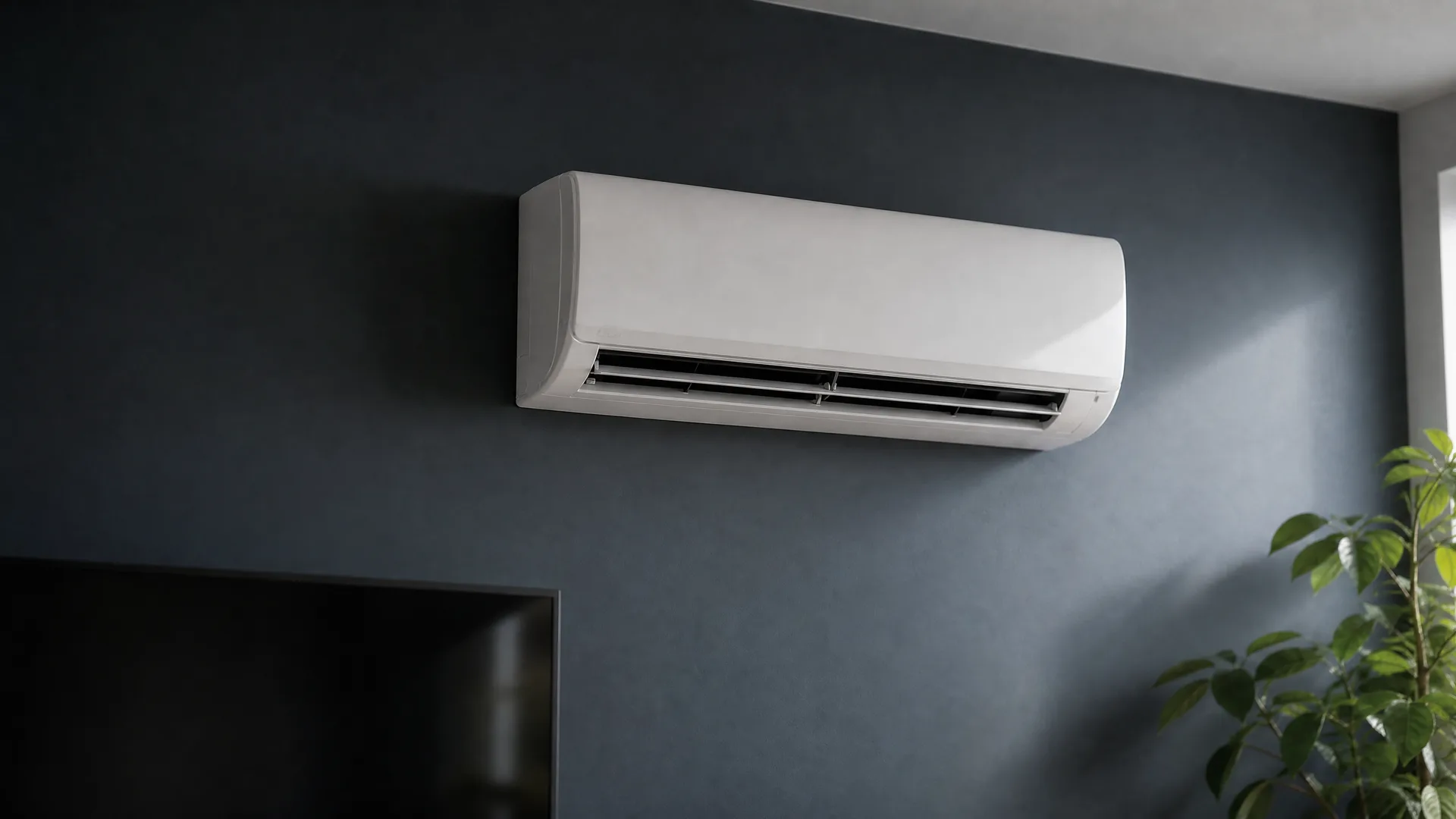
A white wall-mounted mini-split air conditioner on a dark gray interior wall, with a flat screen at lower left and a green leafy plant at lower right.

The right pro for this job

Step 1 of 3: Equipment