Can a mini split be your only heat in Maine

A white wall-mounted mini-split air conditioner indoor unit centered against a plain light gray background.
Hand it off

Can a mini split be my only heat in Maine

Most houses in Maine heat with oil, so a mini split feels like a big change. You've got one installed, or you're thinking about it, and you want to know if it can actually carry the house through a Maine winter on its own, or if the oil furnace still has to stay in the picture when it gets truly cold.

For most Maine homes, no. It can do most of the work, but you need a backup for the coldest stretches.

A cold climate mini split keeps producing heat well below freezing, and it will cover most of the winter here on its own. Where it struggles is the stretch of real cold, the nights in the single digits or below zero that Maine gets most winters. Below a certain outdoor temperature, the unit's output drops and it can't keep up with how fast the house loses heat. That's when the oil furnace or another backup needs to carry the load. The right way to think about it isn't heat or oil, it's a mini split doing most of the season and something else standing by for the nights it can't reach.

A white wall-mounted mini-split air conditioner indoor unit on a light gray wall above a white baseboard and wood-look floor.

Running clean and keeping up

On a cold morning the unit holds its set temperature without the compressor straining to catch up, and the air coming off the vane feels warm, not lukewarm. Defrost cycles are short and infrequent. That's a mini split sized right and keeping pace with a Maine winter on its own.


A white wall-mounted mini-split air conditioner indoor unit installed near a textured ceiling on a plain beige wall, with visible dust and discoloration on its casing and vent.

Falling behind and showing it

Dust built up like this on the housing usually means the filter hasn't been pulled and rinsed in a while, and a dirty filter makes the unit work harder for less heat. If rooms stay cold below zero or the vane ices over for long stretches, it's struggling to be the only source.

A closed dark laptop and a ceramic mug of coffee on a wooden dining table, with wooden chairs, a dark kitchen cabinet with cutting boards and a potted plant, and a leafy plant by a window in the background.

What an oversized or undersized unit costs you

If the mini split can't keep up on the coldest nights, you'll know it by what you reach for next. Most houses here already have an oil furnace or baseboard heat in place, and a unit that's sized wrong just means that backup runs more than it should, on the most expensive fuel and the most expensive power in the country. You end up paying for two systems instead of leaning on one.

Getting the sizing right means someone has actually looked at your house, not just the square footage on a listing. That's the part people put off, because it means finding an installer, getting someone out for a quote, and doing it again for a second opinion before you trust the number. Send the form once and that search is off your plate. You're not sorting through contractors on your own; you're waiting on someone who already knows what a Maine winter asks of this equipment.

Interior corner with a beige sofa holding a dark green and a light cushion and a textured throw, a potted small-leaved tree beside a white-framed window, and a dark shallow bowl on a wooden coffee table in the foreground.
A man in a blue sweatshirt reclines with closed eyes in a brown leather armchair in a living room with a bookshelf, houseplant, sofa, window, and a side table holding newspapers and a dark mug.
A bearded man in a gray pullover reclines with closed eyes on a brown leather sofa in a sunlit room with a window, framed picture, potted plant, and a wooden cabinet holding papers and a dark mug.
A man in a gray sweater leans back with closed eyes in a brown leather armchair beside a wooden side table holding a dark mug and a folded newspaper, with bookshelves and a window seat behind him.
A man in a green sweater reclines in an armchair with his eyes closed and a slight smile, beside a window with plants, a small table holding a mug and folded newspaper, and bookshelves behind him.

Mini split alone or with oil backup

Mini split only

  • No oil deliveries to schedule and no tank to keep filled through the winter.
  • On the coldest nights, a single mini split has to carry the whole heat load by itself.
  • If the outdoor unit ever needs service, you have no backup heat source in the house.
  • Electricity in Maine runs among the highest rates in the country, and that's the only fuel you're buying.
  • A correctly sized cold-climate unit keeps working well below zero, so capacity on paper isn't the limiting factor.
  • Rooms far from the indoor head, especially at the far end of the house, can lag behind the room it's mounted in.

Mini split plus oil backup

  • The mini split handles most days, and the oil system only runs when it's needed.
  • You still keep the oil tank filled and scheduled, even in months it barely runs.
  • Having two systems means two things that can need service instead of one.
  • On the harshest nights, the oil furnace or boiler picks up whatever the mini split can't.
  • You're paying for both electricity and oil, so the bill mixes two fuel costs instead of one.
  • If the power goes out, the oil system still needs electricity to run its blower or circulator, so neither one is immune to an outage.
A wall-mounted mini-split air conditioner indoor unit with discolored casing and dusty vents, installed near the ceiling on a plain light-colored wall.
Before you get your mini split installation
A white wall-mounted mini-split air conditioner installed near the ceiling on a beige interior wall, with a window and bamboo blind at the left edge showing green foliage outside.
After you get your mini split installation
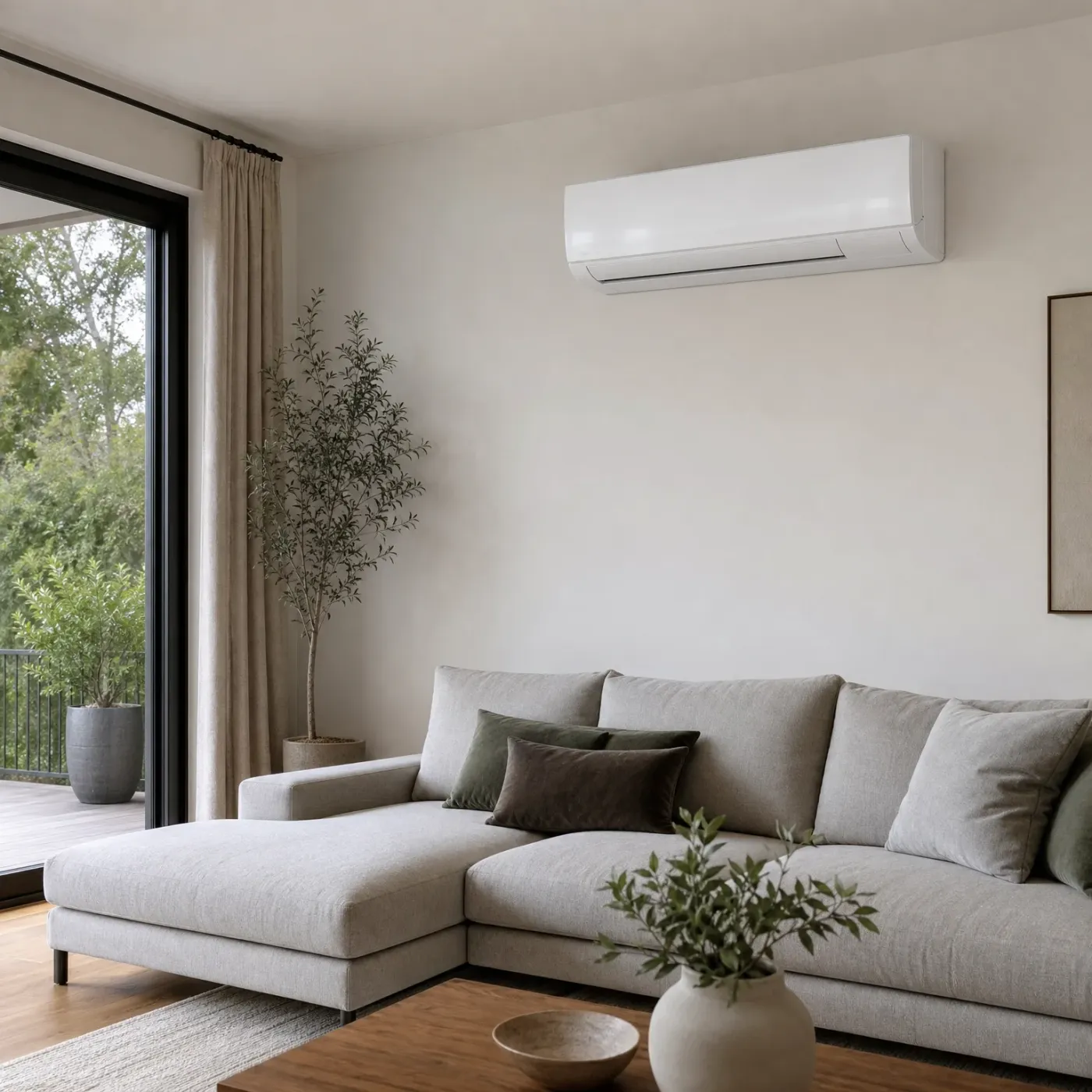
Living room with a grey sectional sofa, wall-mounted white mini-split air conditioner above it, a potted tree beside sliding glass doors with beige curtains, and a wooden coffee table with a vase of foliage in the foreground.

Done looking for a mini split pro

Describe the project once instead of to every installer.

Send the form and the search for an installer is over.

Start one form

It costs nothing to send, and you don't have to hire anyone.

A white wall-mounted mini-split indoor unit on a beige interior wall, with a potted leafy plant at the left and a curtain edge at the right.
A mini split kept clean and clear like this one pulls heat out of outdoor air even when Maine's cold, as long as it's sized for the house.
A dusty, discolored wall-mounted mini-split air conditioner indoor unit near the top of a plain light-colored interior wall below a white molding strip.
Dust packed into the vents and casing like this blocks airflow, and the unit works harder for less heat on the nights you need it most.

How a mini split makes heat

  • A mini split pulls heat from outside air using a refrigerant cycle, the same loop in reverse that cools the house in summer.
  • Cold outdoor air still holds heat down to well below zero, which is why cold climate units keep working through a Maine winter.
  • The outdoor unit runs a defrost cycle to melt frost off its coil, reversing briefly before going back to heating.
  • Capacity drops as the temperature drops, so the number on the spec sheet at 47 degrees isn't what the unit puts out at 5 below.
  • Manufacturers publish a separate rated capacity at 5 degrees Fahrenheit, and that's the number that actually tells you what the unit can do on the coldest night.
  • Oil heat and baseboard electric don't lose capacity in the cold the way a mini split can, which is why sizing for the coldest night matters more here than in a mild climate.

A mini split doesn't burn anything to make heat. The outdoor unit pulls heat out of the outside air and moves it inside through a refrigerant loop, the same cycle that runs in reverse to cool the house in summer. That sounds strange when the air outside is cold, but there's still heat in air down to well below zero, and the refrigerant is built to pull it out at those temperatures.

That loop doesn't run nonstop. Cold, damp air forms frost on the outdoor coil, and frost blocks airflow, so the unit periodically reverses itself for a few minutes to melt it off before going back to heating. That's normal and built into how the system runs all winter.

What changes is how much heat the unit can actually deliver. Every mini split's capacity drops as the outdoor temperature drops. The number on the spec sheet at 47 degrees is a mild-weather number, not what you get on a January night. What matters for Maine is the rated capacity at 5 degrees, the figure that shows what the unit can still put out when it's actually cold. An oil furnace or baseboard heat doesn't work this way. Oil and electric resistance heat put out the same capacity whether it's 30 degrees or 20 below, which is exactly why sizing a mini split for the coldest night, not an average one, is what decides whether it can carry the house alone.

Power costs 27.69 cents per kilowatt-hour statewide

At that rate, every kilowatt your mini split uses costs more here than almost anywhere else. A unit sized right for your house earns that back by pulling heat efficiently; one that's undersized just runs longer and harder, and you pay for every extra hour.

EIA-861 2025 statewide residential average

A mini split can heat your Maine home through the winter, but only if it's sized and installed for your house and your coldest nights, not just your mild ones. Get that right and you can run it as your only heat source and skip the oil deliveries entirely. Get it wrong and you'll end up leaning on a furnace or baseboard heat to fill the gaps, paying for two systems instead of one. The difference comes down to the installation, matching the unit's output to what your house actually loses on a January night, not just what the showroom brochure says it can do. That's not something to guess at or decide from a spec sheet. A contractor who knows Maine winters can look at your house and tell you where you'd stand, and whether one unit carries the load or you need a second one, or a backup you can trust. Once you know that, the rest of the decision gets a lot simpler.

A gray-haired man with a beard in a blue button-placket shirt reclines on a couch with his eyes closed, beside a sunlit window with a green plant.
A woman in a cream knit sweater sits in an armchair with her eyes closed near a window showing yellow autumn foliage, with a mug on a round wooden side table beside her.

Mini Split Installation

It's off your list after this

Describe your mini split job once, to one pro.

A black-framed smartphone standing upright against a plain white background, its screen filled with solid green.
Step 1 of 3: Equipment